
Temu, Shein and AliExpress Now Carry Product Safety Liability
For years, a buyer in Paris who ordered a phone charger from a non-EU platform was, on paper, the importer. That is about to change.
In September 2026, the EU gave final approval to the biggest reform of its customs rules in decades. Online platforms like Temu, Shein and AliExpress will now be treated as the importer of goods they sell into the EU. That means they carry the customs paperwork, the duties, and the duty to make sure products meet EU law.
For non-EU sellers on these marketplaces, and on Amazon and Shopify too, this shifts the pressure. Platforms that face fines for unsafe goods will expect their sellers to prove compliance first.
What the EU Has Agreed
The Council of the EU adopted the new Union Customs Code on 3 September 2026. The European Parliament gave its final approval on 16 September. The law takes effect the day after it is published in the Official Journal, and member states must apply it in full 12 months later.
The key change is the “deemed importer” rule. Sellers and platforms that sell goods from outside the EU directly to EU customers will be treated as the importer. They must:
- give customs all the information it needs and pay or guarantee duties
- make sure the goods they ship to Europe comply with EU law
- be established in the EU, or be represented by an EU-based entity with trusted operator status
| What | When |
| Handling fee on small parcels from non-EU online shops | Collected from 1 November 2026 |
| New EU Customs Authority opens in Lille | 2027 |
| Full application of the new rules | 12 months after entry into force |
The penalties are real. Companies that repeatedly break the rules can be fined between 1% and 6% of the value of goods they imported in the previous 12 months. They can also lose their trusted trader status.
Why This Is About Product Safety, Not Just Customs
This reform did not come out of nowhere. The EU has spent the past year cracking down on unsafe goods sold through large marketplaces.
In May 2026, the European Commission fined Temu €200 million under the Digital Services Act. Its mystery shopping found that a very high share of chargers failed basic safety tests. Many baby toys tested also carried medium to high risks, from banned chemicals to detachable parts that could cause suffocation. In July, AliExpress was fined €550 million for similar failures.
The customs reform adds a new layer. Once a platform is the legal importer, unsafe or non-compliant goods are its problem at the border too. Under the General Product Safety Regulation (GPSR), products sold in the EU also need a responsible economic operator based in the EU, clear safety information and traceability details.
Put simply, platforms now have money on the line. They will not want to carry the risk for sellers who cannot show their products are compliant.
What Non-EU Sellers Should Expect
If you sell into the EU from the UK, the US, China or anywhere else, expect marketplaces to ask more questions before they list your products. That could include:
- the name and address of your EU Authorised Representative or Responsible Person
- your EU Declaration of Conformity and technical documentation
- product labels showing manufacturer details, batch or model numbers and safety warnings
- proof that products meet rules on chemicals, toys, electronics or cosmetics where they apply
Sellers who can’t provide these may see listings paused or removed. The same applies if you ship direct from your own Shopify store to EU customers, as sellers can be treated as deemed importers too.
The good news is that most of this is already required under GPSR. The difference now is that more people will check.
Where Your EU Authorised Representative Fits In
Under GPSR, a product can only be sold in the EU if there is a responsible economic operator based in the EU. For most non-EU brands, that is an Authorised Representative or Responsible Person.
Your representative is the EU contact point for market surveillance authorities. In practice, they help you:
- keep your Declaration of Conformity and technical file ready to share on request
- make sure labels and listings show the correct EU contact details
- respond to authority questions and product safety notices
- support corrective action or recalls if something goes wrong
With marketplaces now under more pressure, a reliable representative is what lets you answer their checks quickly and keep selling.
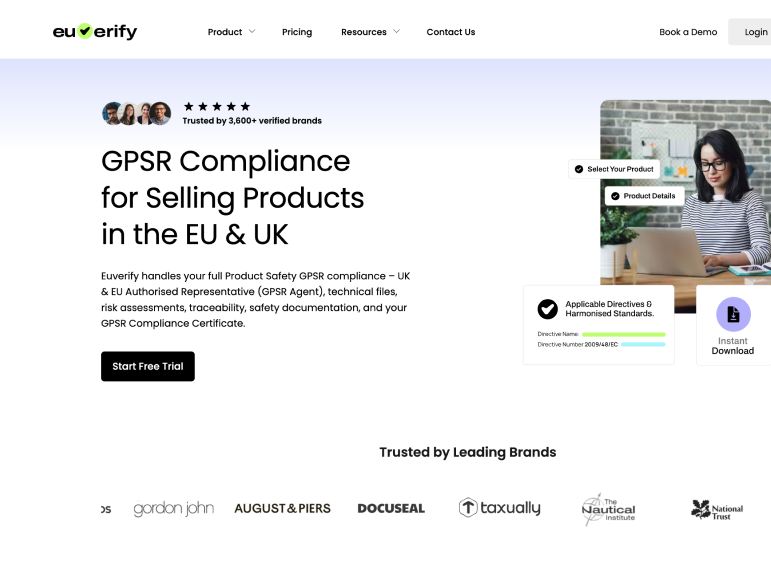
Appoint Your GPSR Responsible Person in the EU and UK
Avoid listing blocks and stay compliant with the GPSR.
Specialist Responsible Person services help brands meet EU product safety requirements and keep technical documentation audit-ready.
The Takeaway
The EU is making platforms answer for what they sell. Temu and AliExpress have already paid €750 million between them, and the new customs rules add fines of up to 6% of import value.
For non-EU sellers, the message is clear. Get your GPSR basics in place now: an EU representative, complete documents and correct labels. Sellers who are ready will find marketplace checks easy to pass.
Ready to Appoint Your GPSR Responsible Person?
Euverify helps global brands sell safely in the EU & UK with full GPSR representation.

Sources
- Council adopts customs reform, Eunews, 3 September 2026
- Parliament gives final approval, Eunews, 16 September 2026
- Council approves customs reform, LexisNexis, 4 September 2026
- Commission fines Temu €200 million, European Commission IP/26/1178
- Data and Cyber Update, September 2026 (AliExpress €550 million fine), Stephenson Harwood