PFAS
What is PFAS?
PFAS (per- and polyfluoroalkyl substances) is a large group of manufactured chemicals valued for their resistance to heat, water, and grease, and historically used in items such as food packaging coatings, non-stick materials, and water-resistant treatments. In the context of EU and UK product regulation, PFAS has become a key compliance concern because many of these substances persist in the environment and the body, leading regulators to restrict their use in packaging and consumer products.
Why It Matters
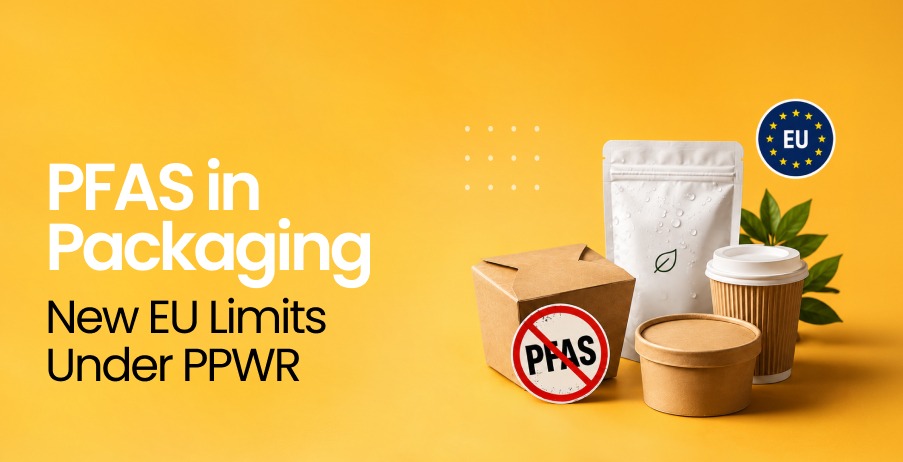
Regulatory attention on PFAS has increased sharply. From 12 August 2026, PPWR bans food-contact packaging containing PFAS above specific thresholds: 25 ppb for any single targeted PFAS, 250 ppb for the sum of targeted PFAS, or 50 mg/kg of total fluorine (which triggers a manufacturer disclosure obligation even where the packaging isn’t automatically non-compliant). Further restrictions on other PFAS uses are separately being considered under REACH.
Because PFAS can be present in coatings, inks, and treatments rather than the base packaging material itself, businesses cannot always identify its presence through visual inspection alone. Supplier declarations and material testing are often needed to confirm compliance.
Products found to contain restricted PFAS levels can be blocked from the EU market, recalled, or subject to enforcement action, and non-compliant packaging can affect an entire product line rather than a single item.

Key Requirements
Who Needs to Consider PFAS Restrictions?
PFAS-related obligations are relevant to any business placing packaging or packaged products on the EU or UK market, including:
- Manufacturers of packaging materials, coatings, and treatments
- Importers and distributors of packaged goods, particularly food-contact packaging
- Food and beverage businesses using packaging sourced from third-country suppliers
- Online marketplaces facilitating sales of packaged consumer products
This is particularly relevant for food contact packaging and food-adjacent materials, textiles and apparel with water- or stain-resistant treatments, cookware and kitchenware, and cosmetics and personal care packaging.
Responsibilities Relating to PFAS
Businesses seeking to manage PFAS compliance risk are generally expected to:
- Request confirmation from suppliers on whether PFAS is intentionally added to packaging materials or coatings
- Check food-contact packaging against the specific thresholds — 25 ppb single substance, 250 ppb summed, or 50 mg/kg total fluorine — applicable from 12 August 2026
- Commission independent testing where supplier assurances are insufficient or unavailable
- Maintain records of PFAS-related checks as part of broader supply chain due diligence
- Monitor developments under REACH, as PFAS restrictions are expected to expand over time
- Plan for reformulation or resourcing of packaging materials where restricted PFAS levels are identified
PFAS and Technical Documentation
Where PFAS-related restrictions apply, businesses should retain documentation demonstrating that packaging materials fall within permitted thresholds, including supplier declarations, material safety data, and any independent test reports. This documentation supports both the business’s own due diligence and its ability to respond to regulatory enquiries.
Packaging Compliance Under PPWR
Selling packaged products in the EU? Every unit now falls under the Packaging and Packaging Waste Regulation (EU) 2025/40. Euverify handles your Declaration of Conformity, technical file, and compliance documentation as part of your plan, no expertise required on your end.
Related Terms