
Is Your Product a Cosmetic Under EU Law? The Borderline Products Guide for Manufacturers and Importers
Many products sold as cosmetics do not qualify as cosmetic products under EU law. Some are medicines. Some are medical devices. Some are biocides. Some are food. And a few are toys.
That might sound like a legal technicality, but the consequences of getting it wrong are significant. If your product does not meet the EU cosmetic product definition under Cosmetics Regulation (EC) No 1223/2009, it cannot be legally placed on the EU market as one. You would be using the wrong regulatory framework, missing the right safety assessments, and potentially facing enforcement action from national market surveillance authorities.The Working Group on Cosmetic Products publishes the Borderline Products Manual to clarify these distinctions. The latest version (5.5, June 2025) guides manufacturers, importers, and distributors. This post uses that guidance to explain the boundaries clearly and practically.
What Is the EU Cosmetic Product Definition Under Regulation (EC) No 1223/2009
The definition in Article 2(1)(a) of the Cosmetics Regulation is specific. A cosmetic product is any substance or mixture intended to be placed in contact with the external parts of the human body, such as the epidermis, hair system, nails, lips, and external genital organs, or with the teeth and the mucous membranes of the oral cavity, with a view exclusively or mainly to cleaning them, perfuming them, changing their appearance, protecting them, keeping them in good condition, or correcting body odours.
Three things matter in that definition. It has to be a substance or mixture, not an article. It has to be placed in contact with a specific list of body parts, and nothing else. And its primary purpose has to be one of the six listed cosmetic functions.
If any one of those three conditions is not met, the product is not a cosmetic. That is where borderline questions arise.
EU Cosmetic Product Classification: When Product Format Creates a Borderline
Some products raise classification questions simply because of how they’re designed or delivered.
Articles That Release Substances
A wig, a laser device, or a needle roller isn’t a cosmetic product. It’s an article, and articles are outside scope. But if something acts as a vehicle for delivering a substance to the skin, the substance being delivered may well be a cosmetic.
Examples include wipes soaked in a skincare mixture, fabric clothing that releases a substance onto the skin, wet razors with a cosmetic strip, and skin patches carrying a cosmetic ingredient. In each case, the article itself is out of scope, but the substance it delivers could be a cosmetic product.
The same logic applies to self-tanning drops or concentrates that consumers mix with another cosmetic before applying. If the product ends up on the skin after mixing, it’s a cosmetic, and the safety assessment needs to account for every reasonable mixture a user might create.
Where You’re Applying It Matters
The Cosmetics Regulation is explicit about where cosmetic products can go. The vagina isn’t on the list, so products intended for internal vaginal use fall outside scope. Nasal sprays are also out, as nasal mucous membranes aren’t covered by the definition.
Products that are swallowed, inhaled, injected, or implanted are also excluded. This is where things get interesting at the boundary with food.
A breath-freshening tablet that dissolves and is swallowed is generally treated as food. The deciding factor is whether an averagely well-informed consumer would understand the product as something to be ingested. If yes, it’s food. If the substance contacts the teeth or oral mucosa and is then spat out, it may be a cosmetic.
Oral drops, sprays, or gels claiming to freshen breath or keep the oral mucosa in good condition can qualify as cosmetics, provided they’re not intended to be swallowed, that’s made clear on the label, and they don’t contain ingredients with known pharmacological or psychoactive properties.
Cosmetics vs Medicines: The Most Common EU Borderline Product Question
This is the most common borderline question, and commercially the most significant one. The core distinction is whether a product restores, corrects, or modifies physiological functions by exerting a pharmacological, immunological, or metabolic action. If it does, and that action is significant, it’s a medicinal product by function.
A product can also be classified as a medicine by presentation. This happens when it’s presented as treating or preventing disease, even without proven therapeutic effect.
Products That Do Not Meet the EU Cosmetic Product Definition
The manual is clear that the following types of products do not qualify as cosmetic products:
Product type | Reason it falls outside cosmetic scope |
Products claiming to relieve joint pain | Joints are not external body parts covered by the cosmetic definition |
Products to treat dry mouth | Acting by stimulating saliva production is not a cosmetic function |
Topical breast augmentation products using hormones or phyto-oestrogens | These significantly modify physiological functions |
Products to resorb bruises, swellings, or bumps | Likely to exert significant influence on physiological functions |
Products with healing the skin claims | Healing and wound treatment are not cosmetic purposes |
Piercing care products on non-intact skin with healing or infection-prevention claims | Infection prevention and wound healing fall outside cosmetic scope |
Tattoo aftercare on non-intact skin | Products intended to heal or prevent infection on fresh tattoos are not cosmetics |
Products to relieve tired, swollen, or heavy legs | These address minor peripheral circulatory disorders, not cosmetic functions |
Products intended to treat or prevent acne | Acne is a medical condition; anti-acne claims take a product out of cosmetic scope |
Products against head lice | No cosmetic purpose; classified under medicines, medical devices, or biocides |
Styptic pencils | Stopping bleeding is not a cosmetic purpose |
Products intended mainly to have an effect on muscles | Muscle relief or warming products before or after sport are not cosmetics |
Products presented as treating or preventing oral infections or inflammation | Medicinal presentation takes them out of cosmetic scope |
Products that make lips swell through inflammation or irritation | Deliberate induction of a swelling effect through capsaicin-type ingredients may qualify as medicinal |
Chemical tattoo removers requiring injection into the dermis | Injection is explicitly excluded from the cosmetic definition |
Products claimed to exclusively prevent nail biting | Prevention of nail biting is not a cosmetic purpose |
Products to stimulate sexual activity | Not covered by any of the six cosmetic functions |
EU Cosmetic Borderline Products: Classification Depends on Claims and Presentation
Several product types sit in genuine grey areas. Here’s how the manual handles the most common ones.
Anti-wrinkle products are in principle cosmetics, but products containing banned substances like tretinoin or progesterone are illegal cosmetics if marketed as such. Products that significantly modify physiological functions through their mode of action may also be medicines, regardless of how they’re labelled.
Hair loss products follow a similar logic. ‘Reducing hair loss’ typically lands as a cosmetic claim. ‘Promoting hair growth’ more commonly signals a pharmaceutical. Minoxidil, for instance, is prohibited as a cosmetic ingredient. ‘Preventing hair fall’ may still sit within cosmetic scope.
Products for atopic skin can be cosmetics if the purpose is to clean, protect, or condition skin with atopic tendency. Present the product as treating or preventing atopy or atopic skin disease, and it’s no longer a cosmetic.
Skin whitening is listed as a cosmetic purpose and in principle it qualifies. But products containing hydroquinone, mercury compounds, or glucocorticoids are banned as cosmetics. Using those ingredients and marketing the product as a cosmetic makes it an illegal product.
Acne-prone skin is nuanced. Products for primary comedones (blackheads, whiteheads) may be cosmetics if they clean or protect the skin without making acne treatment claims. Label it anti-acne, or suggest it treats Acne vulgaris or inflammatory lesions, and you’ve stepped out of cosmetic scope.
Eyelash growth products need a full assessment. A claim of ‘eyelash growth’ suggests modification of a physiological function. The absence of that specific claim doesn’t automatically make the product a cosmetic though. The formula and mode of action still need to be assessed on their own merits.
Mouthwashes and dental gels are cosmetics if cleaning or maintaining the oral cavity is the primary purpose. Secondary antimicrobial claims don’t take them out of scope, provided the main function stays cosmetic.
Nail care products covering moisturising, strengthening, or decorating sit within cosmetic scope. Products to treat or prevent fungal nail infections do not.
Products in vials or ampoules can be cosmetics, but only if they’re clearly presented for external use, the labelling makes that explicit, and they’re not marketed alongside any device that could allow injection. A product that looks injectable is at serious risk of falling outside scope.
EU Cosmetic Borderline Products: Toys, Biocides, and Other Regulations
Toys
Make-up on dolls likely falls under the Toy Safety Directive rather than the Cosmetics Regulation, though cosmetic toys still have to comply with the Cosmetics Regulation on ingredients and labelling. Make-up for children to use on themselves is a cosmetic product, regardless of any play element.
Bath products for children with play value (products that colour the water or make crackling sounds, for example) can be both a cosmetic and a toy at the same time. Where both apply, both sets of requirements must be met. Face paints and body paints, including those applied by aerography, are cosmetics. Cosmetic kits that let children make soaps or fragrances are covered by both the Cosmetics Regulation and the Toy Safety Directive under EN 71-13.
Biocides
Leave-on products presented as antiseptic or antibacterial can be biocidal products, cosmetics, medicines, or medical devices, depending on the claims and composition. A product presented as treating or preventing infection or skin lesions is likely a medicinal product by presentation. ECHA guidance on biocidal products is the relevant reference here.
Other EU Regulatory Borderlines: Plaque Products, Glues, Soaps, and Essential Oils
Plaque detection products applied to teeth aren’t cosmetics. Their primary function is detection, not changing appearance. Products that remove glue from skin or nails are cosmetics, because cleaning is a cosmetic function.
Glues intended solely to attach fake nails or false eyelashes aren’t cosmetics, because attachment isn’t a cosmetic function. Substances applied directly to build artificial nails on the nail plate are cosmetics. Magnetic eyeliners that change the appearance of the skin and allow false lashes to attach can qualify as cosmetics, with the attachment function treated as secondary.
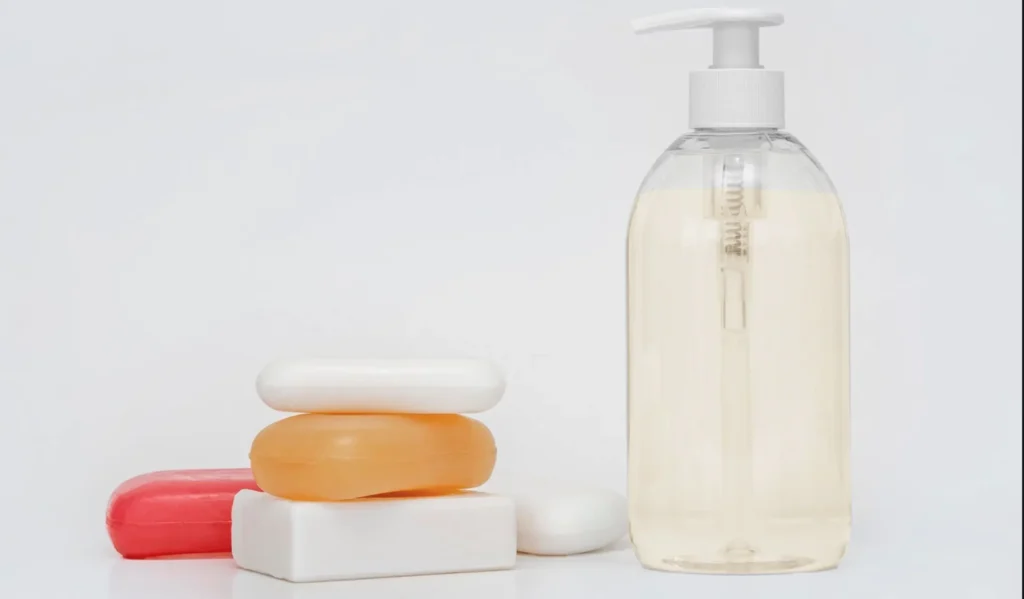
Dual-use soaps with both a personal care and laundry function can be cosmetics, provided the cosmetic function is the primary one. The product must also comply with both applicable regulations.
Essential oils applied directly to the skin with a primary cosmetic purpose can be cosmetics. Essential oils intended to be inhaled or ingested, or used purely under aromatherapy practices without a cosmetic function, fall outside scope.
EU Cosmetics Compliance: What Manufacturers and Importers Need to Do

Classification is always done case by case. The manual is a tool for national authorities, not a binding legal answer. The same product type can qualify as a cosmetic or fall outside the Cosmetics Regulation depending on its formulation, its claims, its presentation, and what it actually does in or on the body. There is no shortcut here.
Before placing any borderline product on the EU market, these are the questions to work through:
○ | Is the product a substance or mixture, and not purely an article? |
○ | Is it intended to be placed in contact with a body part listed in Article 2(1)(a)? |
○ | Is its primary purpose one of the six cosmetic functions? |
○ | Does it contain ingredients that significantly modify physiological functions? |
○ | How is it presented? Do the claims, labelling, or marketing suggest a medicinal purpose? |
○ | Could a reasonably well-informed consumer mistake this for a medicine, medical device, biocide, or food product? |
If any of the last three questions raise doubt, get a proper classification assessment done before going on sale. Using the wrong regulatory framework isn’t just a paperwork issue. It means the product is illegal on the market.
Need Help with EU Cosmetic Product Classification?
Euverify works with cosmetics manufacturers, ingredient suppliers, importers, and distributors across the EU and UK on exactly these kinds of questions. Getting the classification right before you go to market is far less costly than dealing with it after the fact, whether that means a recall, enforcement action, or having to reclassify and resubmit.
If you’re bringing a cosmetic or borderline product to the EU or UK market and you’re not fully confident it qualifies under Regulation (EC) No 1223/2009, speak to us before you launch.
Frequently Asked Questions
Legal responsibility sits with the Responsible Person, the EU-established entity whose name appears on the label. For products made outside the EU, this is typically the importer. If a product is wrongly classified, the Responsible Person faces enforcement action, regardless of where the product was made.
Stop placing further stock on the market and take legal advice before doing anything else. If the product should have been authorised under a different framework, it will need to be withdrawn. Notifying the relevant national competent authority voluntarily is generally treated more favourably than a forced recall.
The Cosmetics Regulation applies uniformly across the EU, but national authorities don’t always reach identical conclusions on borderline products. If you’re launching across multiple markets, it’s worth checking whether any member states have a history of stricter interpretation in your product category.
Both sets of requirements apply in full, with no exemptions. That means two separate compliance processes, two sets of documentation, and labelling that satisfies both frameworks. There is no reduced obligation simply because the product also complies with another regulation.
Yes. Classification is based on the product as it exists on the market at any given time. A new ingredient or an updated claim can shift a product out of cosmetic scope entirely. Any significant reformulation or label change should trigger a fresh classification review.