
EU Energy Label and EPREL: What the Latest Changes Mean for Businesses
The European Commission is currently reviewing the EU energy labelling framework. For businesses that place energy-related products on the EU market, this is worth paying attention to. Not because the rules are disappearing, but because the way they work is changing.
Here is a breakdown of what the framework covers, what is being reviewed, and what the transition to the new Ecodesign for Sustainable Products Regulation (ESPR) means in practice.
What Is the EU Energy Label?

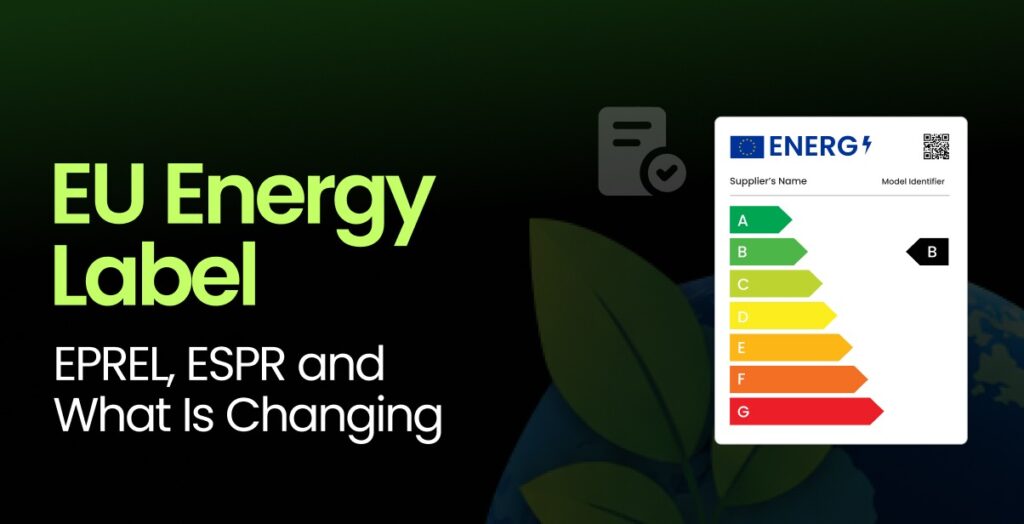
The EU energy label, rescaled in 2021 under Regulation (EU) 2017/1369. Products must be registered in the EPREL database before being placed on the EU market.
The EU energy label has been around since 1994. The version most people recognise today — the A-to-G scale, running from dark green to red — was introduced in 2021 under the Energy Labelling Framework Regulation (EU) 2017/1369.
The label applies to a wide range of products, from household appliances like washing machines and fridges to lighting, air conditioners, and tyres. The rule is straightforward: if your product falls within a regulated category, it must carry the label before it can be sold on the EU market.
Alongside the label, suppliers are required to register their products in EPREL (European Product Registry for Energy Labelling). As of early 2026, EPREL holds data on over 2 million product models from more than 3,000 verified suppliers. From 2021, every energy label must include a QR code that links directly to the product’s EPREL entry, giving consumers, retailers, and market surveillance authorities instant access to verified performance data.
The label is genuinely effective. That level of trust is part of why the Commission is being careful about how it approaches simplification.
Note: According to the Commission’s Special Eurobarometer 555 (2024), 75% of EU consumers say the energy label influenced their choice when purchasing an appliance in the last five years, and 93% say they recognise the label.
EU Energy Label Simplification Review: What Is Being Proposed
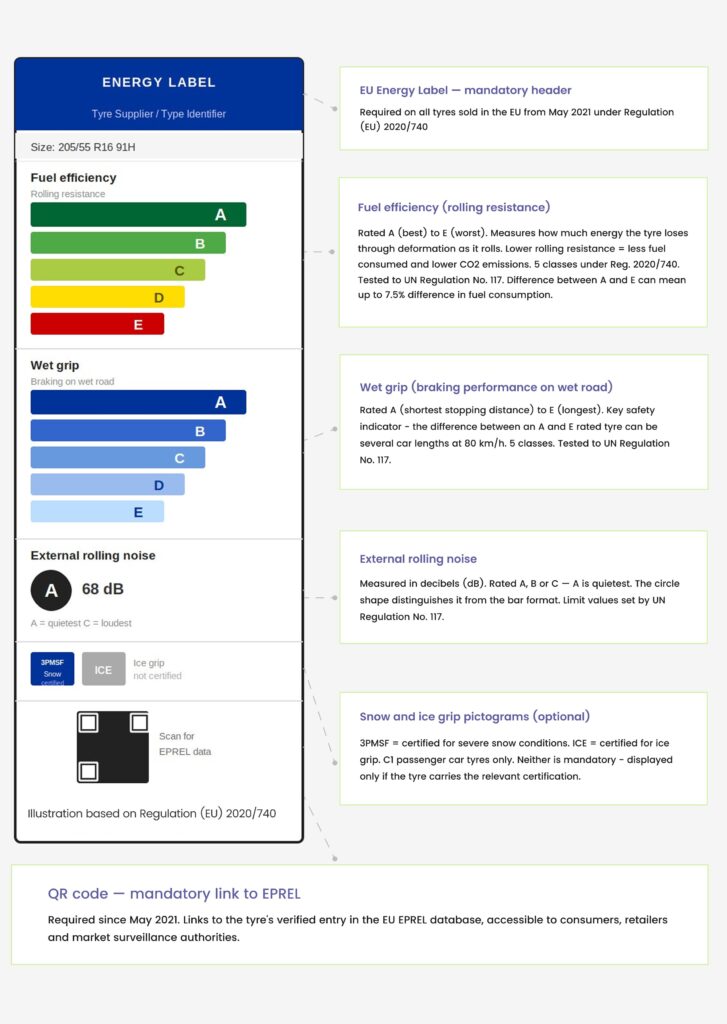
The EU tyre label under Regulation (EU) 2020/740, mandatory from May 2021. It covers five performance parameters: fuel efficiency (rolling resistance), wet grip, external rolling noise, snow grip, and ice grip.
In February 2026, the Commission launched a four-week call for evidence on the Energy Labelling Framework Regulation and the Tyre Labelling Regulation (EU) 2020/740. The goal was to gather input from manufacturers, retailers, market surveillance authorities, and consumers on how to reduce administrative costs while keeping the framework effective.
The review is part of a broader “Energy Omnibus” proposal expected in the second quarter of 2026. This will propose targeted changes to simplify compliance. Things like how labels are supplied and displayed, how EPREL registration works for products that are no longer being placed on the market, and how tyre label requirements apply in advertising and technical documentation.
Importantly, the Commission has been clear that the objective is to make compliance simpler and more effective — not to water down the requirements. The A-to-G label and EPREL registration are not going away.
ESPR Transition: How the New Ecodesign Regulation Affects Energy-Labelled Products
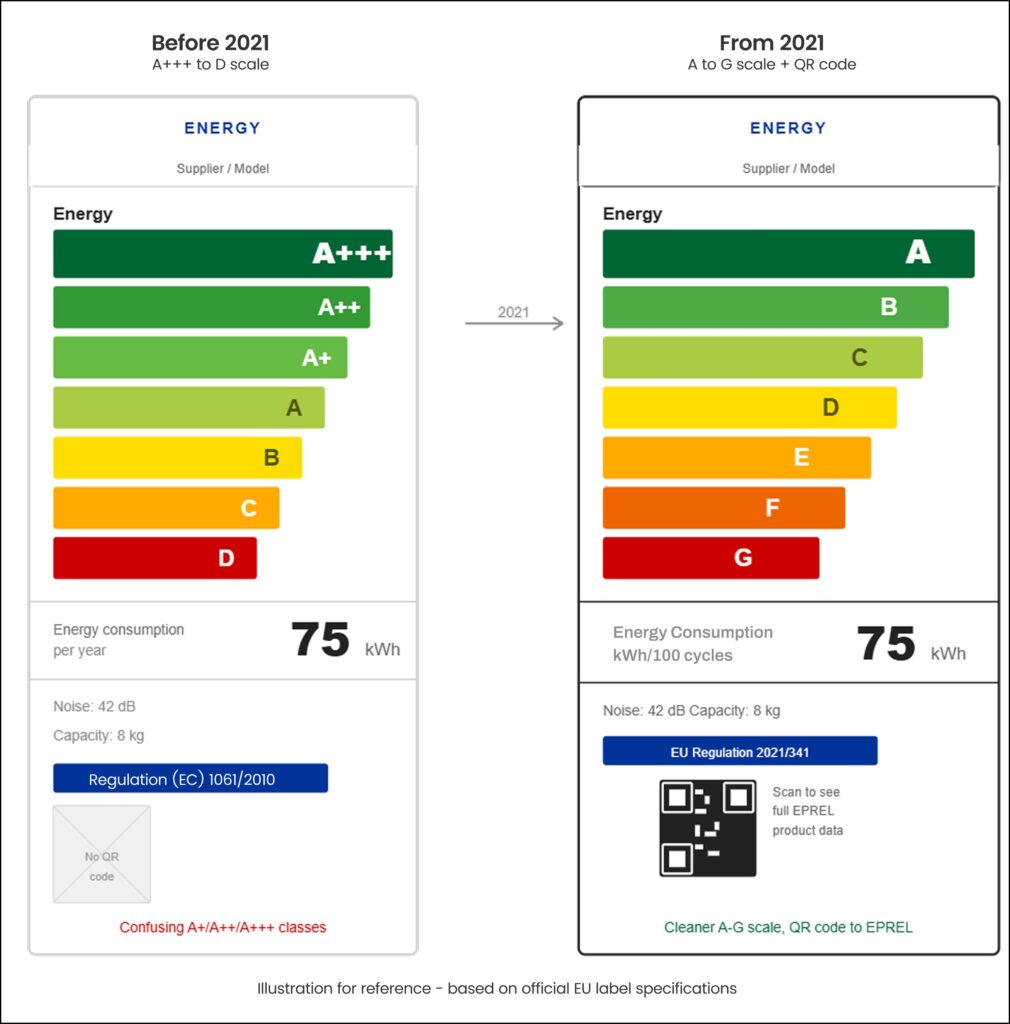
The EU energy label before and after the 2021 rescaling. The A+/A++/A+++ classification was replaced with a simpler A to G scale to make comparisons clearer for consumers.
Running alongside the labelling review is a bigger shift: the transition from the old Ecodesign Directive (2009/125/EC) to the new Ecodesign for Sustainable Products Regulation (ESPR), which entered into force in July 2024.
The ESPR significantly expands the scope of the old Directive. Where ecodesign rules previously applied mainly to energy-related products, the ESPR extends to almost all physical products placed on the EU market. It also introduces new requirements. These include digital product passports, CE marking obligations, and rules on the destruction of unsold products.
The transition is happening in stages. For 19 of the 35 product groups covered by the previous 2022-2024 working plan, the existing ecodesign and energy labelling measures remain in place under the old Directive until 31 December 2026. After that date, the ESPR takes over for those products.
For energy-related products specifically, the energy label is expected to remain the default option under the ESPR — unless a careful assessment concludes it cannot provide the right information for a given product category.
EU Energy Label Compliance: What Businesses and Importers Need to Do Now
The practical implications depend on your product category, but a few things apply broadly.
EPREL Registration: Still a legal requirement for all suppliers
Any product that falls under a delegated act requiring an energy label must be registered in EPREL before it is placed on the EU market. This includes both manufacturers established in the EU and importers bringing products in from outside the EU. Non-compliance risks penalties and market access problems.
Digital Product Passports and ESPR: New obligations beyond the energy label
If your product is covered by the ESPR, you may need to think about digital product passports, updated conformity assessment procedures, and technical documentation requirements — not just the energy label. The Commission is developing product-specific delegated acts that will set out exactly what applies to each category.
Energy label simplification: Lower admin burden, not fewer requirements
The review process is focused on reducing unnecessary administrative friction. Not reducing the substantive requirements. Any changes emerging from the Energy Omnibus proposal will need to preserve the effectiveness of the existing framework.
ESPR transition deadline
For products currently under the old Ecodesign Directive with a transition period, the changeover to ESPR happens on 31 December 2026. Businesses in those categories should be reviewing their compliance position now, not in December.
EU Ecodesign Rules for Space Heaters and Water Heaters: What Is Changing
One area where things are moving quickly is heating products. The Commission has been revising ecodesign and energy labelling rules for space heaters, combination heaters, and water heaters in parallel consultations that closed in late 2025, with adoption expected in early 2026. For manufacturers and importers of these products, label updates and revised product documentation are likely to be required.
Key Takeaways for Businesses Selling in the EU
The EU energy labelling framework is being updated. But the direction of travel is towards clearer, more consistent rules, not a loosening of requirements. The EPREL database is growing and becoming more central to how the label functions. The ESPR is expanding ecodesign obligations to more products and adding new information requirements on top of the label.
For businesses selling energy-related products in the EU, the key questions to be asking right now are: is my product registered correctly in EPREL, does my label reflect the current requirements, and am I aware of what the ESPR transition means for my specific product category?
Euverify helps businesses manage EPREL registration, energy labelling requirements, and broader EU product compliance obligations across the EU market.
If you are working through any of these questions and want to discuss the specifics, we are happy to help.