
Understanding the WEEE Directive for Toys: Are All Toys with Electronics and Batteries Included?
| Most toys on the shelf today have some kind of electronics in them. Lights, sound chips, motors, batteries. If you sell toys in the EU, you need to know whether that puts them under the WEEE Directive (2012/19/EU). In most cases it does. Any toy that needs electric current to work, from batteries or a plug, counts as electrical and electronic equipment (EEE). The Directive names “toys, leisure and sports equipment” as a covered category. Toys that work by hand alone are not covered. Below we cover how to tell which side of the line your toy sits on, what you have to do if it is covered, and what is changing in 2026 and beyond. |
What is the WEEE Directive (2012/19/EU)?

The WEEE Directive sets the rules for collecting, treating, recycling and recovering waste electrical and electronic equipment across the EU. It is built on producer responsibility. Whoever places EEE on the market pays for what happens to it when it is thrown away.
The Directive applies to equipment that depends on electric currents or electromagnetic fields to work properly, designed for use at up to 1,000 V AC or 1,500 V DC. Since 15 August 2018 it has an “open scope”, which means all EEE is covered unless it is specifically excluded.
Toys sit in Annex III, category 5, “Small equipment”. Annex IV gives examples and lists “toys, leisure and sports equipment”, “electric trains or car racing sets” and “hand-held video game consoles” by name.
How to tell if a toy falls under WEEE
There is really only one question to ask. Does the toy need electric current, from batteries or a plug, for at least one of its main functions, such as light, sound, movement or interaction?
If yes, it is EEE and the WEEE Directive applies.
If the toy works entirely by hand, with no batteries, motors or circuits, it is out of scope.
The parts that usually bring a toy into scope are circuit boards, motors, LED lights, speakers and sound chips, sensors, and any Bluetooth or WiFi module. It does not matter whether the power comes from disposable batteries, rechargeable batteries or the mains.
What about exclusions?
The Directive’s exclusions in Article 2 cover things like military equipment, large-scale fixed installations, means of transport and equipment designed to be sent into space. None of these applies to toys. If your toy has electronics or batteries, it is in scope.
Examples of toys that fall under the WEEE Directive
Electronic learning tablets. Example: LeapFrog LeapPad Academy. These have integrated circuit boards, screens and speakers, and run on batteries or mains power.
Remote-controlled cars and drones. Example: Hot Wheels RC cars, Ryze Tello drone. These contain motors, wireless control modules and batteries.
Robotic toys. Example: Sphero BOLT, LEGO Education SPIKE. These use motors, sensors and programmable electronics.
Toys with built-in sound and lights. Example: Fisher-Price Laugh & Learn Smart Stages Puppy. LED lights, speakers and sound circuits make it electronic waste when discarded.
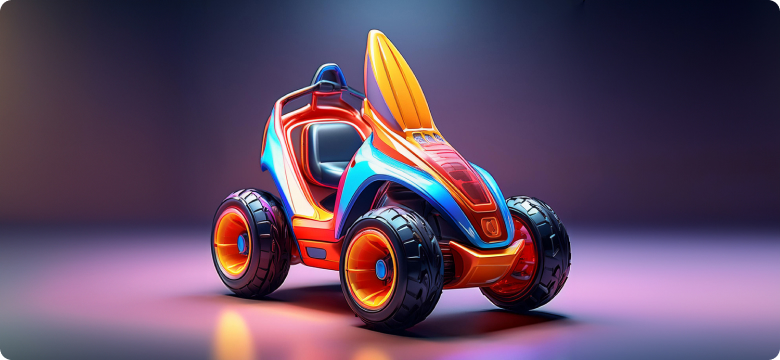
Battery-powered ride-on toys. Example: Peg Perego John Deere Ground Force tractor, Power Wheels 12V ride-ons. These have an electric drive motor, a rechargeable battery and charger, and often lights and sound. Both WEEE and the Batteries Regulation apply.
Interactive dolls and plush. Example: Furby (2023 edition), Hatchimals. These contain circuit boards, speakers, sensors and batteries. Connected toys with Bluetooth or WiFi also fall under the Radio Equipment Directive and, from December 2027, the Cyber Resilience Act.
Electric trains and track sets. Example: Thomas & Friends TrackMaster. Battery-powered motors mean these must be disposed of as electronic waste.
Examples of toys that do not fall under the WEEE Directive
Action figures. Example: Marvel Legends. No electronics or batteries.
Board games. Example: classic Monopoly. No electrical components.
Building block sets. Example: LEGO Classic. Non-electronic sets have no circuits or batteries.
Traditional plush toys. Teddy bears without sound or lights.
Manual ride-on and wheeled toys. Example: Radio Flyer wagons, rocking horses, pedal go-karts. Operated by hand or foot, with no motor.
Sports equipment for kids. Mini basketball hoops, soccer nets.
Watch out for electronic variants within an otherwise non-electronic range. A LEGO set with a light brick, or a plush toy with a sound box, is in scope even if the rest of the range is not.
WEEE obligations for toy producers and sellers
If your toy is in scope, the WEEE Directive makes you responsible for it as a producer. It does not ask for CE marking or a separate safety assessment. What it asks for is registration, money and paperwork:
- Register with the national WEEE register in every EU Member State where you sell.
- Join a producer responsibility organisation (compliance scheme) or finance take-back and recycling yourself.
- Mark the toy with the crossed-out wheeled bin symbol and a producer identifier.
- Report the quantities you place on the market, usually quarterly or annually.
- Appoint an authorised representative for WEEE in each Member State if you are based outside the EU (Article 17). A non-EU seller cannot register directly.
Marketplaces such as Amazon and eBay now check WEEE registration numbers and can suspend listings that do not have them.
Batteries bring a second set of rules
Toys with batteries also fall under the Batteries Regulation (EU) 2023/1542. This means a separate battery producer registration in each Member State, battery labelling, and from 18 February 2027 a requirement that portable batteries in appliances are removable and replaceable by the user. Sealed battery compartments that need special tools will no longer be allowed, so it is worth checking your designs now.
The UK position
The UK applies the same principle under the WEEE Regulations 2013. Toys sit in category 7, “Toys, leisure and sports equipment”. Producers register with the Environment Agency (or the devolved equivalent) through a compliance scheme, and non-UK sellers need a UK-based authorised representative.
What is changing
WEEE revision. The European Commission evaluated the WEEE Directive in July 2025 and found five major shortcomings, including enforcement gaps with online sellers and unclear scope. A revision proposal is expected in 2026. It will probably turn the Directive into a Regulation that applies directly in every Member State, with a single registration approach and higher collection targets. Non-EU online sellers are the main focus.
Toy Safety Regulation. The new Toy Safety Regulation (EU) 2025/2509 replaces Directive 2009/48/EC from August 2030. It introduces a Digital Product Passport for toys and tighter chemical rules. WEEE obligations continue alongside it.
Key takeaways
Electronic learning toys, remote-controlled toys, robotic toys, interactive plush and battery-powered ride-ons all fall under the WEEE Directive because they need electric current to work.
Non-electrical toys such as action figures, board games and building sets do not.
If your toy is in scope, you need WEEE registration in every EU country you sell to, and usually battery registration too. Non-EU sellers need an authorised representative for both.
Conclusion
Toys with electronic components or batteries fall under the WEEE Directive (2012/19/EU) whenever they need electricity to function. The rules are about what happens to the toy at end of life rather than product safety, but the registration and reporting duties are real, and marketplaces check them.
Euverify acts as authorised representative for WEEE, batteries and packaging across the EU and UK, and handles registration and reporting for non-EU toy sellers. If you are not sure which of your products are covered, send us your product list and we will check it for you.