
7 Common Eyewear Compliance Mistakes Brands Make and How to Avoid Them
Placing eyewear products on the EU or UK market isn’t as simple as applying a CE mark and printing a label. Whether you’re launching fashion frames, sunglasses, or medical-grade reading glasses, the compliance requirements are complex and constantly evolving. Brands, importers, and startups often uncover eyewear compliance mistakes only after facing customs delays, online platform takedowns, or market surveillance warnings.
Here are the 7 most common eyewear compliance mistakes businesses make and how to avoid them before they cost you money, products, or your reputation.
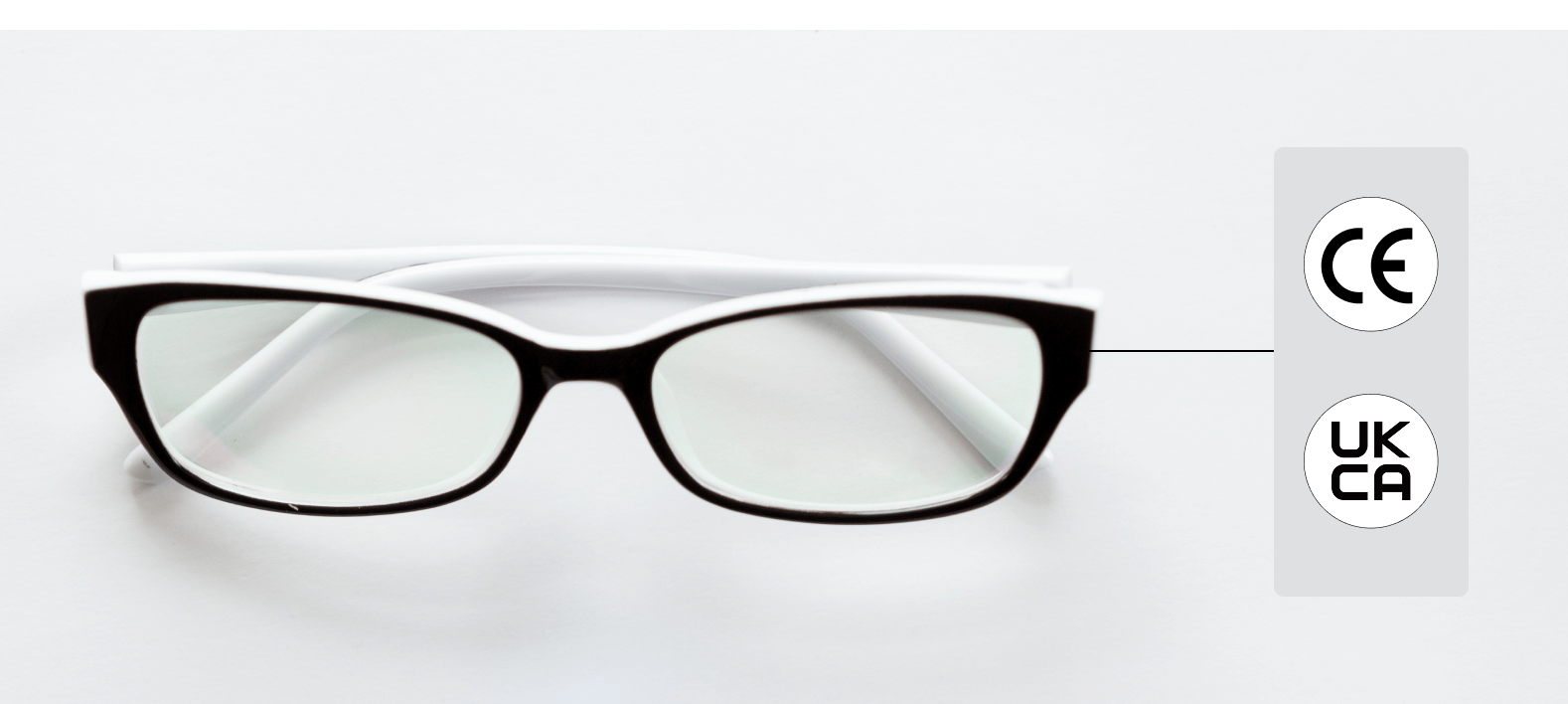
1. Assuming One Size Fits All for CE and UKCA Marking for Glasses
The mistake:
Many companies believe a single CE or UKCA mark covers all types of eyewear, whether it’s sunglasses, prescription glasses, or safety eyewear. Some even rely on generic markings from manufacturers without checking if they’re actually valid.
Why it’s a problem:
Different types of eyewear fall under different legal frameworks, and classification depends on the product’s intended purpose — not on whether or when lenses get fitted:
Optical frames, including unglazed frames sold to be glazed later = Class I medical device (EU MDR 2017/745 / UK MDR 2002), from the point the frame is placed on the market.
Non-corrective sunglasses = PPE (Category I).
Safety eyewear = PPE (often Category II, requiring third-party assessment).
Prescription sunglasses and prescription inserts = assessed against both the medical device and PPE frameworks.
Each has its own marking path, applicable standards, and required technical documentation.
How to avoid it:
- Identify the correct product type and applicable regulation (PPE vs MDR)
- Follow the right conformity assessment process. Some products require a Notified or Approved Body
- Make sure your CE/UKCA mark for glasses is backed by real technical documentation and valid test reports
2. Treating Testing as Optional or Skipping It Entirely
The mistake:
To cut costs, some eyewear brands skip product testing or just take their supplier’s word for it. Others rely on old or irrelevant test reports.
Why it’s a problem:
Without up-to-date test reports that meet EU and UK standards, your product can’t be legally CE or UKCA marked. Customs officials and online platforms like Amazon often ask for proof. If your products fail testing after hitting the market, you could face recalls or hefty fines.
How to avoid it:
a) Make sure you test according to the right harmonized or designated standards for your product’s regulatory route:
- Medical device route (EU MDR / UK MDR 2002): EN ISO 12870 for unglazed optical frames intended for prescription lenses; ISO 14889 for uncut finished spectacle lenses; ISO 16034 for ready-to-wear reading glasses
- PPE route (Regulation (EU) 2016/425): EN ISO 12312-1 for sunglasses, EN ISO 16321-1 for eye and face protection (replacing EN 166)
Note: EN ISO 12870 is a medical device standard — it doesn’t apply to eye protection products or sunglasses with non-corrective (afocal) filters, so don’t rely on it as evidence of PPE compliance.
b) Use accredited labs only and confirm the reports match your exact model.
c) To save money, consider batch testing or pooled testing when possible.
3. Missing or Misplacing Importer Information
The mistake:
A lot of imported eyewear products come into the EU or UK without clear importer details, or those details are only on the outer carton.
Why it’s a problem:
Both EU and UK rules require the importer’s name and address to be clearly visible on the product or its packaging. Missing this info can lead to border delays, rejections, or even fines.
How to avoid it:
- Make sure the full importer name and address (within the EU or UK, depending on your market) are included.
- Put this information directly on the product, the packaging, or with an accompanying document if space is tight.
- If you’re the importer, don’t forget to meet your legal responsibilities as well (see Mistake #6).
4. Ignoring Country of Origin Labelling Rules
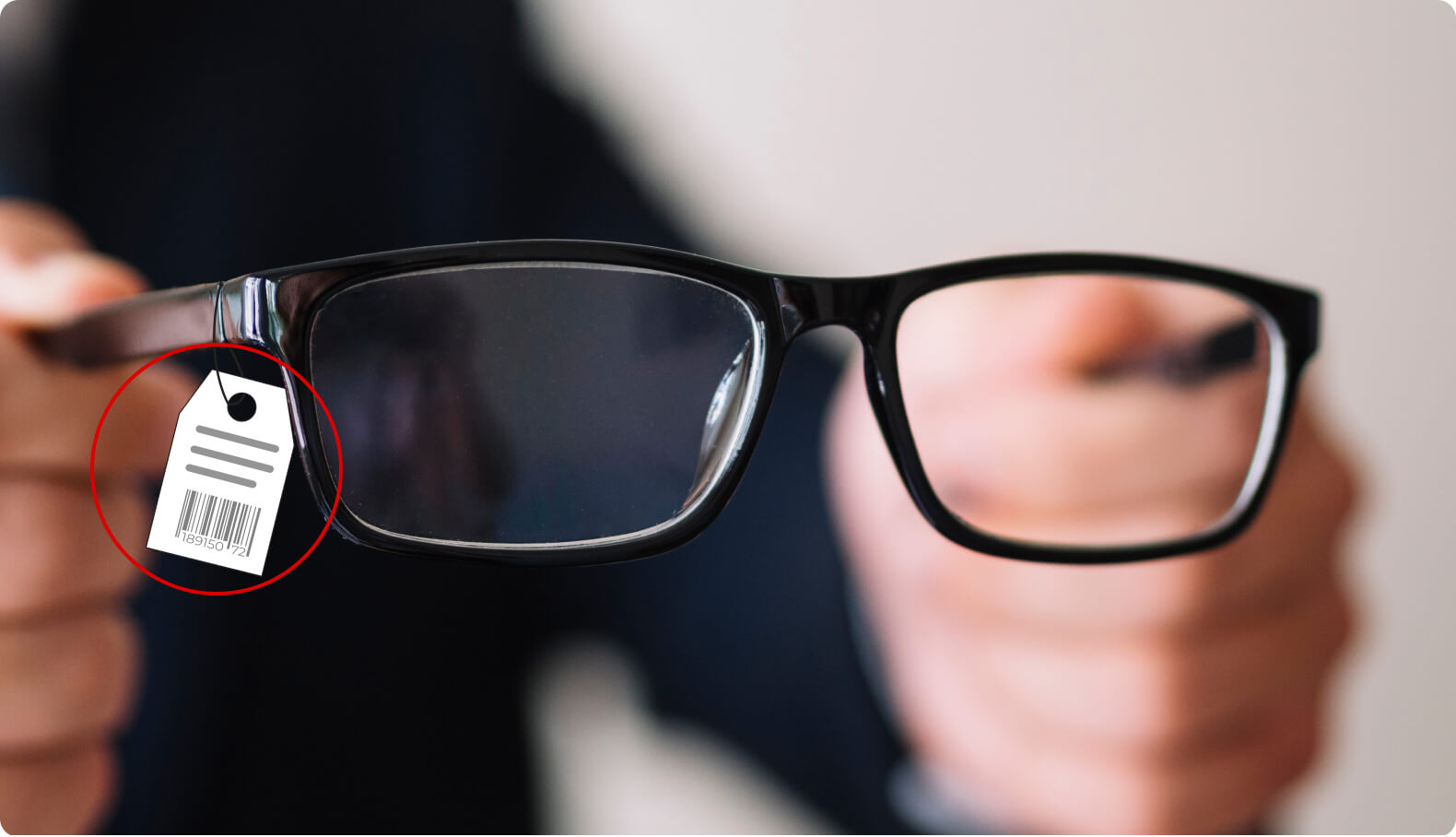
The mistake:
Many brands either skip “Made in [Country]” labels or add them inconsistently because they’re unsure if it’s needed or where to put them.
Why it’s a problem:
Country of origin labelling isn’t always mandatory. But false or misleading claims like saying “Made in Italy” when it’s actually made in China are illegal. Some markets or retailers also require origin labels, and they help customs officials understand what they’re handling.
How to avoid it:
- Use honest, clear origin labels like “Made in China” if you include them.
- Follow platform or retailer rules and apply origin labels consistently on both frames and packaging.
- Keep origin labels separate from CE/UKCA marks and importer information.
- For medical device eyewear (optical frames, prescription sunglasses/inserts), the label or accompanying documentation should also carry your EU Authorised Representative and UK Responsible Person details, plus the product’s UDI (Unique Device Identifier).
5. Using Outdated or Incomplete Technical Files
The mistake:
Many brands put together a “basic” technical file using a template or supplier documents, and then forget about it. Some skip creating one altogether.
Why it’s a problem:
Your CE or UKCA marking is only valid if it’s backed by a full, up-to-date technical file. Authorities can ask to see it at any time, and if you can’t provide it, your product could be pulled from the market.
How to avoid it:
a) Create a technical file for each product family or variation
b) Include key documents like:
- Risk assessment
- Lab test reports
- Declaration of Conformity
- Labelling and user instructions
- Product photos and specifications
- Clinical evaluation report (medical device route)
- Post-market surveillance (PMS) plan and report (medical device route)
- UDI records (medical device route)
c) Keep the file easy to access and update it whenever you change the design, materials, or supplier.
6. Thinking Compliance Is the Manufacturer’s Job

The mistake:
Importers and brand owners often assume that eyewear compliance is the factory’s responsibility, especially when the manufacturer provides a CE mark.
Why it’s a problem:
If you’re the importer or brand owner, you are legally responsible for making sure the product complies. If anything goes wrong (such as safety issues, missing paperwork, or a fake CE mark), you are the one on the hook, not the factory.
How to avoid it:
- Take full ownership of the eyewear compliance process, even if your factory offers support
- Double-check all documentation, including test reports, declarations, and labeling
- If you’re not based in the EU or UK, local representation is mandatory, not optional. Medical device eyewear (optical frames, prescription sunglasses, and prescription inserts) requires an EU Authorised Representative and a UK Responsible Person. PPE eyewear (sunglasses, safety eyewear) and other general products require an EU-based economic operator (responsible person) under the GPSR / UK equivalent.
7. Forgetting About Environmental Compliance (EPR)
The mistake:
Eyewear brands often focus on product safety but overlook the fact that their packaging comes with responsibilities, especially under Extended Producer Responsibility (EPR) rules in the EU.
Why it’s a problem:
In countries like France, Germany, and the UK, producers are legally required to:
- Register with national packaging compliance schemes
- Report the types and amounts of packaging they put on the market
- Pay recycling or recovery fees
If you don’t comply, you could face penalties or even risk being banned from platforms like Amazon.
How to avoid it:
- Check if you’re considered a “producer” under the rules in each country
- Register with the relevant national body (like Valpak in the UK); in Germany, registration is with LUCID, the central packaging register — Der Grüne Punkt is one of the licensed compliance schemes you fulfil your packaging obligation through, it isn’t the registration itself.
- Track and report your packaging use every year
Technical Files Checklist & Risk Assessment Template
Eyewear & Glasses
- Ensure Compliance
- Reduce Risk
- Streamline Documentation
- Supports market access
Get it now for just £40!

Final Thoughts
Each of these eyewear compliance mistakes can be avoided, but many brands do not spot them until it is too late. A proactive, well-structured approach to compliance helps reduce risk, build trust with retailers, and establish a stronger, more scalable foundation for your business. In the highly regulated world of eyewear, where products may be classified as PPE, medical devices, or — for clear, non-corrective eyewear with no filter or protective claim — fashion accessories, getting the details right is essential to avoid costly delays, delistings, or recalls. Fashion sunglasses are still PPE Category I regardless of styling.
At Euverify, we help eyewear brands succeed from day one. We manage everything from CE and UKCA marking to technical documentation, importer setup, and packaging compliance. We guide you through this complexity so that your sunglasses, optical frames, and readers can confidently enter the EU and UK markets.
Appoint Your EU Representative for PPE Eyewear & Ensure Compliance
- Stay compliant with EU regulations
- Hassle-free representation for Eyewear & Glasses