
PPWR and Cosmetic Packaging: What Beauty Brands Need to Know
Two regulations now govern every cosmetic product sold into the EU. Here’s what changes on 12 August 2026, and where cosmetic packaging rules and cosmetics labelling start competing for the same space on pack.
Cosmetic compliance has always meant one regulation: Regulation (EC) No 1223/2009. Safety assessments, ingredient lists, Responsible Person duties, all built around what’s inside the bottle.
That’s changing. From 12 August 2026, the EU Packaging and Packaging Waste Regulation (PPWR) applies directly across every Member State, and for the first time, cosmetic packaging carries its own legal obligations, separate from what’s inside it.
If your brand sells skincare, makeup, or fragrance into the EU, you now have two regulations to satisfy on a single product: one for the formula, one for the box it ships in.
Neither regulation has room for guesswork right now. PPWR’s headline deadline lands this month, and the European Commission is still publishing implementation guidance to close gaps in the original text. That combination, a hard deadline paired with a moving interpretation, is exactly the situation where brands end up making expensive cosmetic packaging decisions on incomplete information.
What Is the PPWR (EU Packaging and Packaging Waste Regulation)?
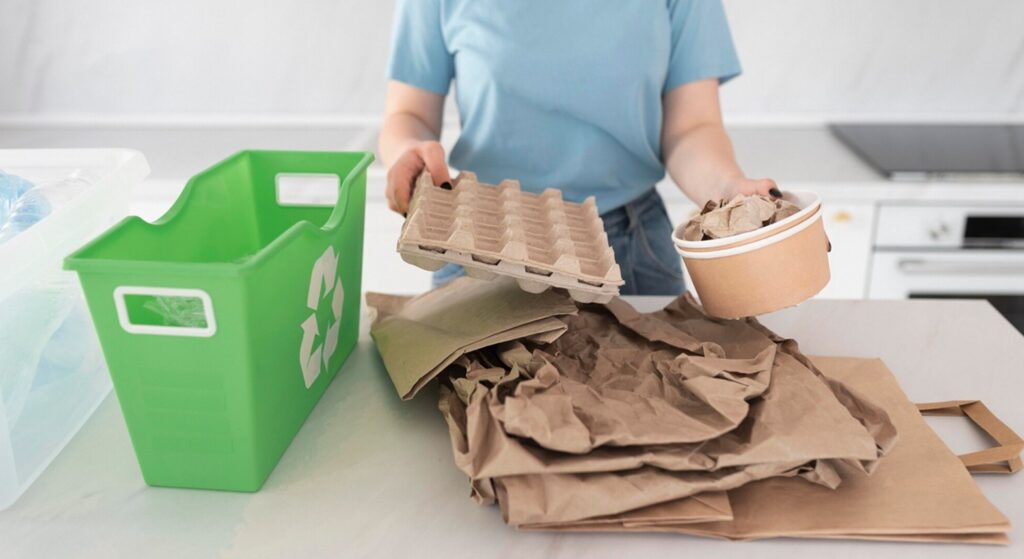
PPWR (Regulation (EU) 2025/40) entered into force on 11 February 2025 and replaces the old Packaging Directive. The shift from Directive to Regulation matters: Directives left Member States room to implement rules differently, which is why France ended up with the Triman logo and other countries built their own labelling systems. A Regulation applies the same way everywhere, with no national transposition needed.
Its core aims: less packaging waste, more recyclable design, and more recycled material in what does get used. For cosmetic brands specifically, that touches primary packaging (the bottle, jar, or tube), secondary packaging (the outer box), and how both are labelled and documented.
It’s worth being precise about what actually lands on 12 August 2026, because not every PPWR obligation starts on the same date. The general application date brings in the core structure: scope, definitions, the substance restrictions, and the documentation duties. Some of the more visible changes, the harmonised sorting label chief among them, follow on a slower timeline, with labelling specifications expected around 2028 and the full recyclability regime landing by 2030. Treat August 2026 as the date the legal framework becomes binding, not the date every requirement is fully in effect.
That distinction matters for planning. A brand that waits until the 2030 recyclability deadline to start redesigning packaging will find itself short on lead time, since sourcing certified recycled content and requalifying multi-material closures both take longer than most product development cycles allow for.
How PPWR Affects Cosmetic and Beauty Packaging
Design for recycling
By 1 January 2030, all packaging placed on the EU market must meet recyclability criteria, graded A to E. Packaging scoring below Grade C (roughly under 70% recyclable — Grades D and E) will be barred from the market. This corrects two things: Grade E on its own isn’t defined as “under 70%. Airless pumps, metal springs inside caps, and multi-material closures are the components likely to need redesign work, since these are common in skincare and makeup packaging.
Packaging minimisation
Article 10 bars packaging designs that increase the perceived volume of the product, and the Commission’s own FAQ guidance uses cosmetics as its worked example: a 50ml jar for facial cream must be reduced to the minimum volume needed to protect what’s inside, and any double wall, false bottom, or outer cardboard box that makes the cream look larger than 50ml needs to be justified with test evidence in the technical documentation, not just design preference. For a category where perceived weight and fill are often part of the premium feel, this requirement lands more literally on cosmetics than on almost any other sector.
Recycled content targets
Plastic packaging will need a minimum share of post-consumer recycled material, with the first major threshold landing in 2030 and a higher one in 2040. For premium and luxury lines, sourcing PCR material that doesn’t compromise finish or clarity is likely to be the harder part of this requirement, not the sourcing itself.
The empty-space rule
From 2030, grouped, transport, and e-commerce packaging can’t have more than 50% empty space — though a stricter general limit is understood to already apply from August 2026, so check current packaging against the tighter threshold now rather than waiting. Double-walled jars and oversized gift boxes built purely for shelf presence will draw scrutiny here.
Single-use hotel amenity packaging
From 1 January 2030, Annex V, point 5 bans single-use packaging for cosmetics, hygiene, and toiletry products supplied for an individual hotel booking — the small shampoo, conditioner, and lotion bottles placed in rooms. The ban only applies to packaging tied to an individual booking, not to miniatures sold or dispensed on demand elsewhere on the property, and the exact scope (including items like toothbrushes and cotton pads) is still pending further Commission guidance. Brands supplying hotel amenity kits should treat single-use miniatures as a format under active review, not a safe default.
Heavy metal limits
PPWR sets a general limit of 100mg/kg for lead, cadmium, mercury, and hexavalent chromium in packaging materials. This applies across sectors, including cosmetics.
PFAS
Worth noting because it’s easy to assume the worst: PPWR’s PFAS restriction applies to food-contact packaging. It does not extend to cosmetic packaging. Don’t let this one drive unnecessary reformulation of packaging materials.
Declaration of Conformity
Every packaging unit placed on the EU market needs its own DoC, covering identification, manufacturer details, and the standards it was tested against. This isn’t something a supplier can hand over as a disclaimer. Brands placing the packaging under their name carry the legal responsibility for it, which means checking supplier documentation properly rather than filing it unread.
Extended Producer Responsibility
PPWR builds on existing national EPR schemes rather than replacing them outright. Brands placing packaging on the market in a given Member State register with that country’s authority and report on packaging type, weight, recyclability, and recycled content. If you’re already registered under an existing EPR scheme, expect the reporting categories to change even where the registration itself doesn’t.
It helps to separate who owns which obligation here. PPWR draws a line between the manufacturer, generally the brand that decides on packaging design and carries responsibility for sustainability and labelling conformity, and the producer, identified per Member State, who carries the EPR reporting duty in that market. A brand can be both at once, but the two roles get assessed against different requirements, so it’s worth confirming which applies where you sell.
PPWR vs. Cosmetics Labelling: Where the Two Rules Overlap
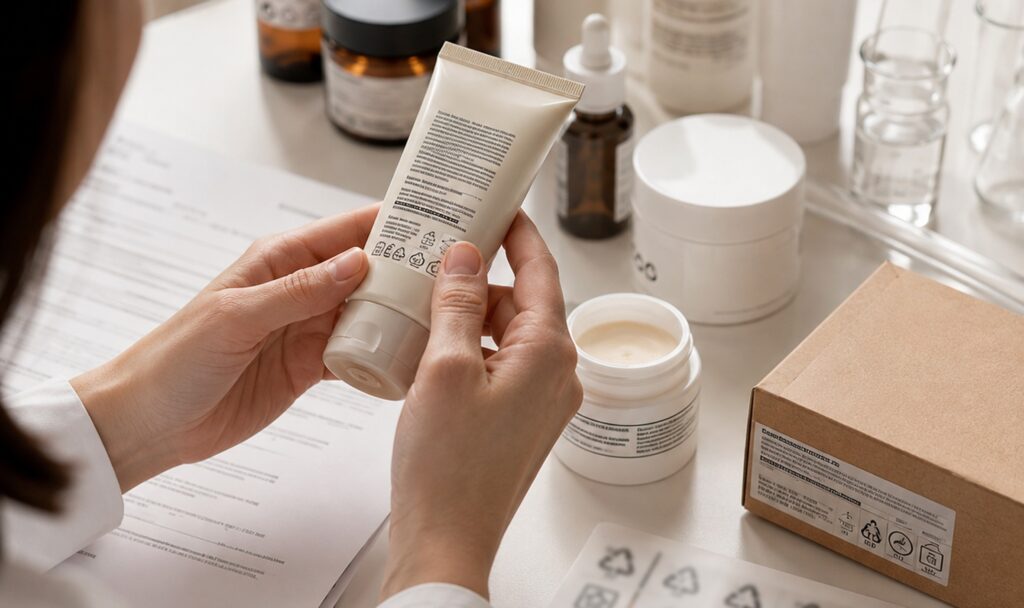
This is where PPWR and cosmetics regulation start competing for the same physical space. Cosmetic labels under Regulation 1223/2009 are already tight: INCI ingredient lists, batch numbers, Responsible Person details, warnings, and (from recent amendments) up to 80 declarable fragrance allergens.
PPWR now adds a harmonised sorting label, under Article 12, showing material composition so consumers can sort packaging correctly. The Commission’s direction is that mandatory EU-wide symbols will replace national ones like Triman, likely from 2028, and that they won’t sit alongside old national labels once that happens.
For small-format packaging, lip products, sample sizes, minis, this is a genuine space problem. QR codes are emerging as the practical way to carry supplementary information digitally, but the mandatory content required under the cosmetics regulation still has to appear physically on pack. Label design now needs to account for both regulations from the start, not as an afterthought once the artwork is finished.
There’s also a national-rules problem to plan around. The Commission’s position is that country-specific symbols, Triman being the clearest example, won’t be permitted to sit alongside the new EU-wide label once it’s mandatory. Brands currently running France-specific packaging runs to accommodate Triman will need to fold that into a single EU-wide design rather than maintaining parallel artwork indefinitely.
None of this changes what has to appear under the cosmetics regulation itself. Responsible Person details, INCI list, batch number, and allergen declarations remain mandatory on the physical label regardless of what PPWR adds. The practical challenge is fitting a second regulatory label onto packaging that, in cosmetics, is often smaller than in almost any other consumer goods category.
PPWR Compliance Checklist for Cosmetic Brands
- Audit your packaging portfolio and flag multi-material or high-empty-space formats.
- Check supplier documentation for heavy metal compliance and DoC readiness, not just recyclability claims.
- Confirm whether your packaging counts as food-contact anywhere in its lifecycle (some jar liners and closures do).
- Map where a sorting label will physically fit before final artwork is locked. Treat PPWR and cosmetics labelling as one design brief, not two separate sign-offs.
- Confirm which EU markets you place packaging in directly, since EPR registration is handled per Member State.
- Ask suppliers for certified recycled-content data now, rather than at the point a buyer asks for it.
What’s Still Unclear About PPWR (and Why You Shouldn’t Wait)
It’s fair to say PPWR isn’t a finished regulation yet, even as its core obligations become binding. The Commission has acknowledged that further implementing measures are expected over the next two to three years, covering exact label formats, conformity assessment procedures, and clearer PFAS testing methodology for food-contact packaging. Several parliamentary questions on open interpretation points remain unanswered.
That’s not a reason to wait. The framework, scope, documentation duties, and substance limits, are settled and binding from August. The parts still being finalised are mostly about implementation detail, not about whether the obligations apply to your packaging. Brands that treat this as “wait and see” tend to end up doing rushed compliance work later, on a timeline that’s no longer theirs to set.
PPWR and Cosmetics Compliance: How Euverify Can Help
Most cosmetic brands already have a Responsible Person and CPSR in place. Fewer have started on packaging conformity, largely because it’s only just become a legal requirement rather than a sustainability preference.
Euverify supports both sides of this from one place. On the cosmetics side, that’s Responsible Person services, CPSR, PIF, and CPNP/SCPN notification. On the packaging side, our compliance platform is built to bring PPWR documentation, DoC preparation, and labelling review into the same workflow as your existing GPSR and AR/RP obligations.
That split matters more than it looks. Handling these separately usually means two consultants, two timelines, and two sets of documentation that don’t reference each other. Given how directly PPWR labelling now interacts with cosmetics labelling, a split like that risks the two teams working from different assumptions.
If you’re preparing packaging for the August deadline, or still working out whether your current packaging portfolio is at risk, get in touch. We’ll walk through what applies to your specific product range and where the two regulations meet.