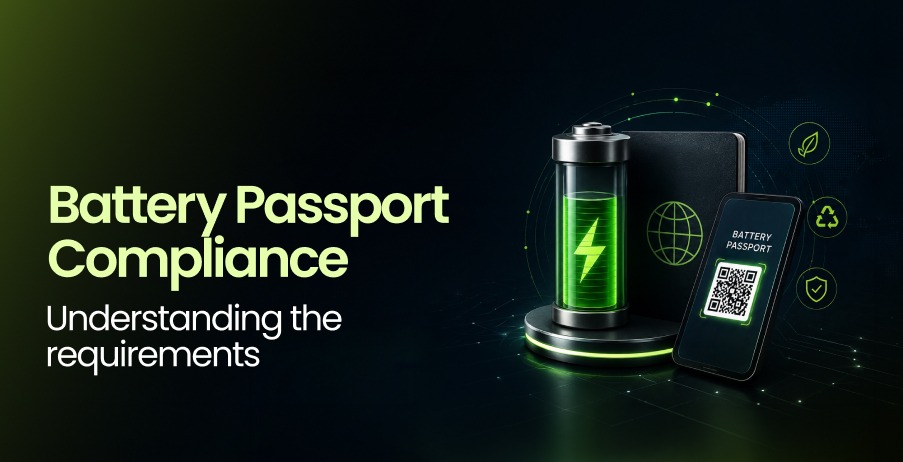

Battery Passport Compliance: What’s Actually Required Before 18 February 2027
Batteries weren’t first in line for the Digital Product Passport by chance. The EU Battery Regulation came before the wider Ecodesign for Sustainable Products Regulation, and it set its own passport deadline: 18 February 2027. That’s not a soft target like some of the other ESPR sector dates still are. It’s written into the law itself, Article 77.
If you make, import, or sell EV batteries, batteries for e-bikes and similar light transport, or industrial batteries above a certain size, this is worth actually understanding, not just noting and moving on.
What is a Battery Passport?
It’s an electronic record for a single battery. It runs on the same technical setup as the wider DPP system, the same Registry, the same standards, but it comes from its own law. That’s a bit unusual: most DPP product categories are still waiting on the EU to spell out their rules. Batteries already have theirs.
The detailed data isn’t stored inside the battery, and it isn’t sitting in one central EU database either. It stays wherever the company that places the battery on the market keeps it, and a QR code links to it through a unique identifier.
Which Batteries Need a Battery Passport?
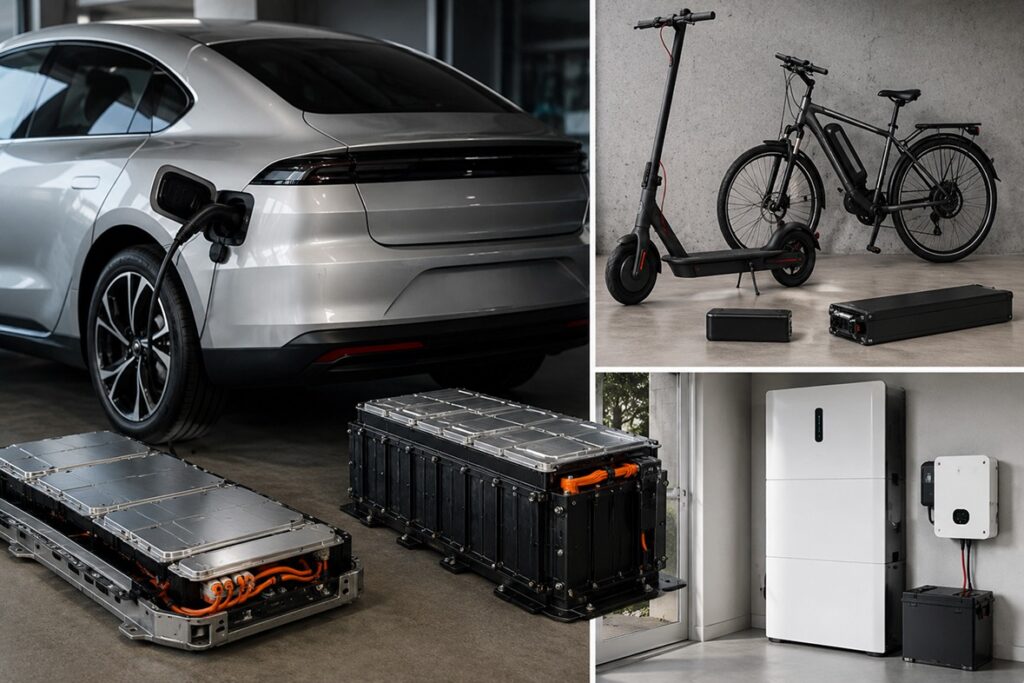
Three categories fall under this requirement:
- Electric vehicle batteries — batteries built to power hybrid or electric cars, vans, and other road vehicles, along with heavier motorbike batteries over 25kg. This is the category most people picture when they hear “battery passport.”
- LMT batteries (light means of transport) — the sealed batteries inside e-bikes, e-scooters, and similar wheeled vehicles that combine electric and human power, capped at 25kg by definition. This weight limit is actually how the regulation separates them from EV batteries in the first place.
- Industrial batteries above 2kWh — batteries designed for industrial or business use, which also pulls in stationary storage systems. The Commission’s guidance extends this to home storage batteries too, even though a battery wall in someone’s garage doesn’t feel “industrial” in the everyday sense of the word.
A remote control battery or a torch battery doesn’t need this.
Worth checking that 2kWh line properly rather than assuming your product’s fine. It’s easy to mix up rated capacity and usable capacity, and getting it wrong in either direction causes problems.
Battery Passport Data Requirements and Access Levels
This is where people usually trip up. A battery passport isn’t one document everyone can open. The regulation splits the information into different tiers, each meant for a different audience:
- Public tier — anyone scanning the QR code can see this: what the battery’s made of and any hazardous substances, its carbon footprint figures, recycled content and renewable content share, rated capacity and voltage, the relevant markings and declaration of conformity, and how the manufacturer plans to deal with the battery at end of life.
- Legitimate interest tier — this one covers two separate things. First, detailed composition and dismantling instructions (exploded diagrams, disassembly steps, tools needed, safety warnings) go to repairers, remanufacturers, second-life operators, and recyclers, anyone who actually needs to open the battery up. Second, and separately, individual performance and state-of-health data goes to the purchaser or whoever’s acting on their behalf, which specifically includes independent energy aggregators and energy market participants once a battery gets a second life in energy storage.
- Regulatory tier — test reports proving the battery meets the Regulation are kept for notified bodies, market surveillance authorities, and the Commission. This is inspection paperwork, not something a competitor or customer gets to look through.
That legitimate-interest tier matters commercially because industrial and home storage batteries often end up repurposed for energy storage once their first job is done. Whoever manages that second life needs performance and degradation data, and that data has no business being public.
Whoever places the battery on the market is legally responsible for keeping this information accurate, complete, and up to date. You can hand the day-to-day work to someone else in writing, but the responsibility stays with you.
Other Battery Regulation Obligations: Carbon Footprint and Recycled Content
Easy to lose track of these once you’re focused on the QR code:
- Under Article 7, EV batteries, industrial batteries above 2 kWh, and LMT batteries need a carbon footprint declaration for each battery model at each manufacturing plant. It has to show the footprint by life-cycle stage and say where the battery was actually made, not just where the company is based.
- Under Article 8, batteries with cobalt, lithium, or nickel need documentation on recycled content, specifically how much of those materials came from recovered waste. This kicks in from 18 August 2028, or 24 months after the relevant delegated act, whichever comes later.
Neither of these goes away just because you’ve sorted the passport. They’re separate requirements, though in practice a lot of the same sourcing and manufacturing data covers both.
Battery Passport QR Code and Unique Identifier Requirements
The QR code isn’t something you can design freely. It has to link to a unique identifier that follows specific ISO/IEC standards (15459-1 to 15459-6, or an accepted equivalent), and the underlying data has to be open-standard and machine-readable, built so no single software provider can lock you in. Worth keeping in mind if you’re choosing a DPP service provider now, since picking one that isn’t built on open standards could bite you later.
The code itself needs to be printed or engraved directly on the battery, somewhere visible, legible, and durable enough that it won’t wear off. It only moves to the packaging or accompanying documents if the battery’s size or nature genuinely rules out putting it on the battery itself, not just because engraving is a hassle.
It’s also not only the three passport-required categories that need a code. From 18 February 2027, every battery placed on the EU market carries a QR code of some kind. For LMT, industrial batteries above 2 kWh, and EV batteries, that code opens the full battery passport. For everything else, it links to a lighter set of compliance information instead. And if a battery is later repurposed or remanufactured, it needs a new label reflecting that change too.
How the Battery Passport Connects to the EU DPP Registry

The EU’s Digital Product Passport Registry went live on 20 July 2026, and battery passports register into it the same way other DPP categories eventually will. The Registry doesn’t hold your detailed data, just the identifier and a pointer to where the real information lives. But without registering that identifier, the passport doesn’t count as valid, however complete your data is behind it.
This matters even more if you’re importing batteries rather than manufacturing them in the EU. Customs authorities check the Registry electronically to confirm an imported product has a valid registered DPP, and that the right commodity code has been provided, before releasing it for free circulation. Skip registration and a shipment can get held up at the border, no matter how good the battery itself is.
Penalties for Non-Compliance with Battery Passport Rules
A battery in one of the covered categories without a valid, registered passport simply can’t go on the EU market or into service after the deadline. This isn’t a warning-letter situation, it’s a market access block. On top of that, each Member State sets its own penalties, which have to be effective, proportionate, and dissuasive, so the specifics vary by country.
How to Prepare for Battery Passport Compliance
- Check which of your products are actually in scope. Look at capacity ratings properly, especially if you’re near that 2 kWh line for industrial batteries.
- Take stock of what data you already have. Manufacturing location, materials, and durability info usually feed both the passport and the carbon footprint declaration, so this work counts twice.
- Decide who owns this. Someone in your business, or a partner, needs to be responsible. The liability sits with whoever places the battery on the market, no matter who does the paperwork.
- Enrol in the DPP Registry now. You need to be enrolled before you can register a single product, so there’s no reason to wait until closer to the deadline.
How Euverify can help
Euverify works with manufacturers, importers, and sellers on EU and UK compliance, including the groundwork behind battery passports and Digital Product Passports generally. That means checking whether your products are in scope, organising the documentation the passport and related declarations need, and getting you ready for Registry enrolment before February 2027. Get in touch if you want a clear read on where your battery products stand.
Frequently Asked Questions
From 18 February 2027, under Article 77 of the EU Battery Regulation (EU 2023/1542).
Access is split into three tiers: information available to the general public, information restricted to notified bodies, market surveillance authorities, and the Commission, and information limited to parties with a legitimate interest.
Yes. Article 77(4) allows the economic operator placing the battery on the market to give written authorisation to another party to manage the passport. The legal responsibility for accuracy stays with the original economic operator even after delegating the task.
Yes. Under Article 13, the QR code and related labelling must be printed or engraved directly on the battery wherever possible. If the battery’s size or nature makes that impractical, the QR code and labels can instead go on the packaging or on documents accompanying the battery.
Yes. Once a battery is placed on the EU Single Market, the requirement applies regardless of which specific member state it’s sold into. There’s no country-by-country exemption within the EU.
The regulation specifically names independent energy aggregators and energy market participants. This matters most for industrial and home storage batteries, which are increasingly repurposed for second-life energy storage once their first use ends, and those parties need access to performance and degradation data to manage that..