
Top 10 Compliance Mistakes Brands Make with Children’s Books and Toy Safety
Children’s books have come a long way. Once limited to simple print and illustrations, they now feature sound buttons, textured fabrics, toys, pop-ups, puzzles, and even connected elements. While these additions bring stories to life, they also come with regulatory responsibilities and the potential for mistakes.
Whether you’re a publisher, self-publishing author, or manufacturer, not understanding how toy safety laws apply to your book can have serious consequences. These may include product recalls, fines, or, most seriously, injuries to children.
In this post, we’ll look at some of the most common compliance mistakes brands make with children’s books and toy safety, based on real-world examples from the UK and EU markets. You’ll also learn what typically goes wrong and how to stay compliant while protecting your brand and your readers.
1. Mislabelling the Product as “Not a Toy”
This is a common trick some brands try: adding a label that says “Not a toy” in hopes of avoiding the legal obligations of toy safety laws.
The problem? It doesn’t work.Under the EU’s Toy Safety Directive and the UK’s Toys (Safety) Regulations, a product is considered a toy if it’s designed or intended for play by children under 14, regardless of how it’s labelled.
For example, if you publish a soft book with squeakers and mirrors designed for babies, a “Not a toy” label won’t change how it’s classified. Regulators will still treat it as a toy and may even see the misleading label as a red flag for non-compliance.
Avoid this mistake by:
- Honestly evaluating whether your product provides “play value”
- Referring to the EU’s Toy Classification Guidance (especially Document No. 9)
- Treating the book as a toy if it clearly functions as one, and complying accordingly
Mislabelling is a textbook example of children’s book compliance mistakes and one of the fastest ways to end up with a recall or enforcement action.
2. Skipping EN 71-1 Mechanical and Physical Testing
EN 71-1 is a critical standard for any children’s product classified as a toy. It focuses on mechanical and physical properties to ensure your book won’t cause harm through breakage, sharp edges, small parts, or entrapment.
If your children’s book includes pull-tabs, flaps, sound modules, ribbons, pop-up elements, plastic add-ons, or textured materials, it likely needs to pass EN 71-1 testing. Don’t assume that glued or sewn parts are safe. Children tug, chew, and test every seam. Failing this standard could result in a product recall or even a toy ban in EU or UK markets.
EN 71-1 tests include:
- Small parts testing (to prevent choking)
- Sharp edge and point detection
- Tension and torque (simulating toddler pulling)
- Cord length checks (to prevent strangulation)
- Folding/hinge tests (to avoid finger traps)
If your book fails any of these, it won’t pass conformity assessment, and that puts you in breach of the toy safety directive for children’s books.
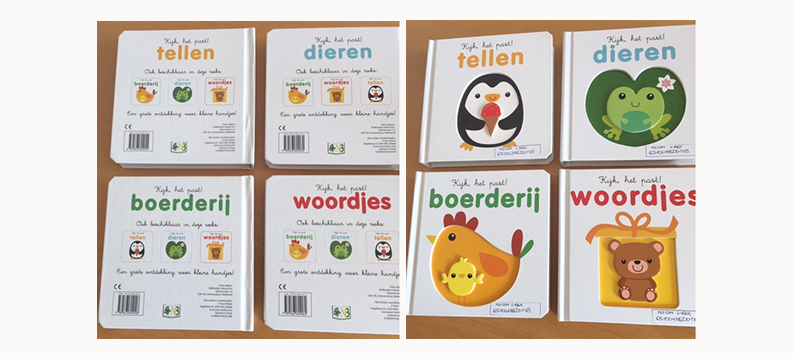
Example: In Belgium, a set of cardboard children’s books titled “Kijk, het past!” (including Dieren, Boerderij, Tellen, and Woordjes) was recalled due to a choking hazard. The books sold online via platforms, were found to generate small parts that pose a risk to young children. The product did not comply with the EU Toy Safety Directive or the relevant standard EN 71-1. As a result, the importer initiated a recall from end users.
3. Overlooking Small Parts in Book-Toy Sets
More and more children’s books are sold with bundled toys, puzzles, or figurines.
These are attractive to kids and great for sales, but they also turn your product into a multi-component toy set.
This means that every item in the set, not just the book, must be safe, tested, and compliant.
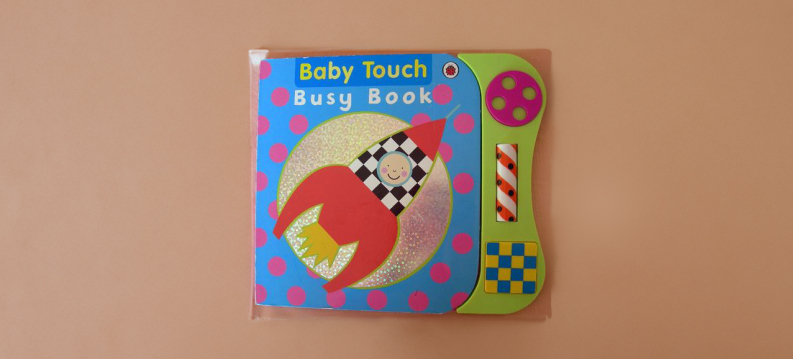
Example: In the UK, a recall was issued for Baby Touch Busy Book / Baby Board Book from the Ladybird brand (produced by Penguin Books Ltd, ISBN 18442 27553) due to a serious choking hazard. Manufactured in China, the book includes an activity panel with a turnable plastic cylinder. When dropped repeatedly, the pins securing the cylinder may break, releasing small parts – including beads – that pose a choking risk. Although no injuries were reported, the manufacturer received two customer complaints. The toy does not comply with the Toy Safety Directive or standard EN 71-1. A voluntary recall was initiated by the producer.
Avoid this mistake by:
- Testing every part of the set for small parts risks under EN 71-1
- Labeling the product appropriately if small parts are present (e.g. “Warning: Not suitable for children under 36 months. Small parts.”)
Never mixing toddler-targeted products with small-parts toys in the same package
4. Failing to Secure Battery Compartments in Sound Books
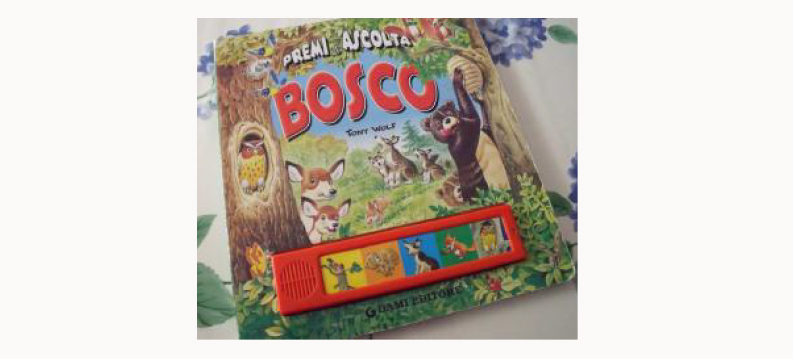
Sound books are delightful, but they can be life-threatening if made improperly.
One of the biggest toy safety non-compliance cases in recent years involved button batteries. If a child swallows one, it can cause serious internal burns or even death within hours. Regulators now closely scrutinize any product containing batteries, especially those marketed to young children.
If your book contains a sound module or lights powered by button cells, the battery compartment must be:
- Screwed shut or child-resistant
- Labelled with the battery recycling symbol
- Marked with a warning about ingestion risks
And don’t forget: even a well-designed product must still undergo EN 62115 testing for electrical toy safety if it contains electronic components.
5. Using Unsafe or Unverified Materials
Even if your book doesn’t include toys or electronics, it still needs to comply with chemical safety laws. Under REACH (EU) and UK REACH, products must not contain restricted substances above legal limits, especially if they are likely to be handled or mouthed by children.
Materials to be cautious of include:
- Printing inks and coatings
- Foam padding or textured appliqués
- Glue or adhesives
- Plastics (PVC, vinyl, etc.)
For toy-classified books, the standard is stricter: EN 71-3, which covers the migration of toxic elements, applies. This includes lead, mercury, arsenic, chromium, and more.
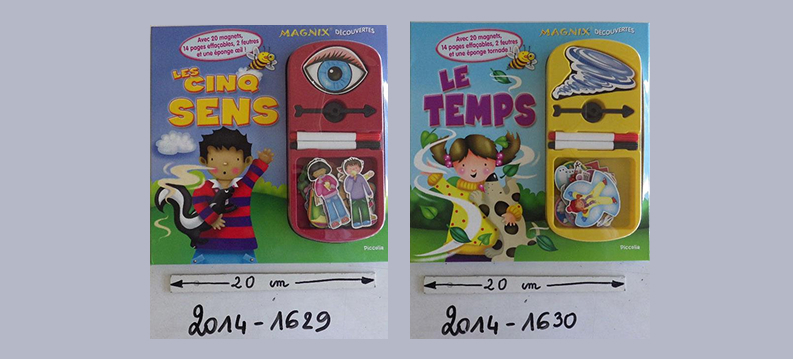
Example: In France, two MAGNIX – Editions PICCOLIA toy books titled Les Cinq Sens and Le Temps were withdrawn from the market and destroyed due to a chemical risk. The books, which include magnets and felt-tip pens, were found to contain benzene in the pens at levels up to 35 mg/kg – far above the legal limit. Benzene is a known carcinogen and harmful if inhaled or if it comes into contact with skin. The product, originating from the United States, did not comply with the EU REACH Regulation.
Best practice:
- Use certified non-toxic inks (ask printers for EN 71-3 compliance)
- Avoid PVC components unless tested for phthalates
- Ask suppliers for full material safety documentation
Unsafe materials have triggered multiple children’s book recalls in recent years. Don’t be next on the list.
6. Ignoring the Toy Safety Directive Entirely
Some brands, especially small publishers, don’t realise they fall under the Toy Safety Directive at all.
If your book is considered a toy or includes toy-like features, you need to follow all the relevant rules, including:
- Preparing a Declaration of Conformity
- Maintaining a technical file for 10 years
- Affixing the CE mark (EU) or UKCA mark (UK)
- Applying appropriate warning labels
- Testing the product to applicable harmonized standards (like EN 71-1, 71-2, 71-3)
You also need to ensure traceability by including:
- Manufacturer name and address
- Importer details (if selling cross-border)
- Product identification or batch code
Skipping these steps doesn’t just break the rules. It prevents you from legally selling your product.
7. Missing or Misapplying Safety Labels
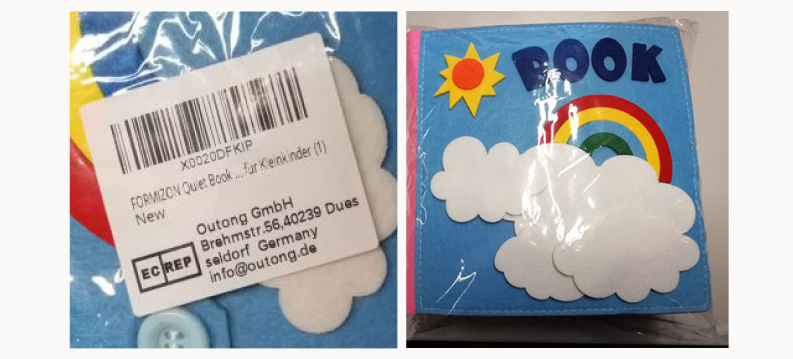
Many compliance issues often come down to something surprisingly simple: poor labeling. Even if your product is thoroughly tested and safe, regulators can still take action if the labels are missing, incomplete, not in the required language, or visually incorrect, such as a distorted CE mark.
For toy books, labelling must include:
- The CE or UKCA mark (at least 5mm tall, not stylized)
- Product ID or batch number
- Name and address of the manufacturer/importer
- Required safety warnings, including:
- “Not suitable for children under 36 months”
- The 0–3 age pictogram
- Reason for warning (e.g., “Small parts” or “Long cord”)
Pro tip: Don’t put this on a removable sticker. The information must still be available after purchase. Ideally, include it in the imprint or on the back cover, and repeat it on the external packaging if needed.
8. Not Recognising “Play Value” in the Book Design
Not every book with bright colors is a toy. But if it’s designed for play, it probably qualifies as one.
The EU evaluates toy classification using five criteria:
- Target age group
- Material (paper, plastic, textile)
- Sensory stimulation (textures, sounds, movement)
- Number of pages (fewer pages = more likely toy)
- Intended purpose — education vs entertainment
Books that include crinkly fabric textures, feature mirrors or squeaky inserts, or are marketed for children aged 0 to 2 are almost always considered toys under EU law.
One of the most common compliance risks in children’s books is underestimating their play value. Even well-meaning publishers can overlook this, not realising that playful features may classify a book as a toy under the law.
9. Neglecting Compliance for Digital Features
Digital storytelling is booming. Many children’s books now include downloadable apps, QR codes that link to interactive games, or smart pens and e-readers. But once you step into the digital space, you take on a whole new set of responsibilities.
If your app or website collects data, even something as simple as usage analytics, you may need:
- Parental consent under GDPR (EU) or the UK Children’s Code
- Age-appropriate privacy notices
- Strict data minimisation practices
And if the product includes electronics (e.g., Bluetooth, Wi-Fi, voice features), additional testing for:
- EMC (electromagnetic compatibility)
- Low voltage safety
- Cybersecurity
Smart books can be amazing for kids. Adding sounds, apps, or interactive features makes them fun and engaging. But the moment you go digital, the rules get tougher. From data privacy to safety standards, there’s a lot more to think about.

10. Confusing or Inappropriate Age Ratings
You’ve probably seen it. A book clearly made for toddlers, but labelled “3+” just to avoid toy safety rules. Or a sticker book with tiny pieces marked as “safe for all ages.” These kinds of mismatches aren’t just misleading. They’re against the law. The age you recommend has to match the actual safety of the product. If it doesn’t pass the small parts test, it’s not safe for children under 3. No exceptions.
To stay compliant:
- Use age labelling based on test results and not marketing goals
- Include proper warnings if needed
- Avoid vague or contradictory claims (“Baby book – Ages 3+” = red flag)
This is one of the clearest examples of toy safety non-compliance. If a child gets hurt because of it, it can lead to serious enforcement action.
Final Thoughts: Better Books Start with Safer Designs
Bringing joy to a child through your work is deeply rewarding, but safety must always come first. Whether you’re publishing a simple board book or pairing a story with a plush toy, it’s important to know how your product is classified, what safety testing it needs, and whether your materials, design, and labels meet the standards for children’s products. Toy safety is about protecting young readers and earning the trust of parents, caregivers, and regulators.
If you’re not sure whether your book needs CE or UKCA marking, safety warnings, or testing to standards like EN 71-1, don’t guess. Getting the right guidance early on is much easier and less costly than dealing with a recall later. It’s also the right thing to do for any brand that truly cares about its youngest readers.