GPSR and Consumer Vulnerability: What Economic Operators Must Consider for Compliance
When the EU rewrote the rules on product safety, they didn’t just update a few definitions. They changed the mindset businesses need to bring to every product they put on the market. Under the General Product Safety Regulation (EU) 2023/988, companies must now do something many have never formally done before: build consumer vulnerability into every decision they make.This is not a soft recommendation. It is one of the biggest legal shifts in the new regulation, and it affects the entire product lifecycle, from design and risk assessment to instructions, marketing, and the way you communicate safety alerts.If you manufacture, import, distribute, fulfil, or run a marketplace for consumer products in the EU, understanding how vulnerability affects product safety is no longer optional. It is a legal duty, and many businesses are still unprepared for it.This article explains what the GPSR requires, how to integrate vulnerable consumer groups into your risk assessments, and the practical steps you can take to stay compliant
What “Vulnerable Consumers” Means Under the GPSR
The GPSR requires economic operators to consider the characteristics of the people who will use their products, with particular attention to groups that are more likely to face certain risks.
According to the official Guidelines, businesses must pay close attention to:
- Children
- Older people
- Persons with disabilities
- Other groups with vulnerabilities related to gender, cognitive ability, physical limitations, or mental health
The Guidelines make this explicit. They state that operators must take into account “situations of consumer vulnerability and the characteristics of consumers such as their gender” when assessing product risks (European Commission, 2025, p. 13).
This represents a major expansion compared with earlier safety rules, and it places new responsibilities on businesses to think more carefully about how different users may be affected by their products.
Consumer Vulnerability Is Not Only Physical: Mental Health Risks Count Too

One of the most important updates in the GPSR is its recognition that mental health risks are part of product safety.
The Guidelines explain that a product is considered safe only if it does not create unacceptable risks to a person’s physical or mental wellbeing. They note that mental health aspects include “cognitive abilities, depression, anxiety, and poor sleep quality” (European Commission, 2025, p. 6).
This requirement is especially relevant for:
- Apps
- AI-powered products
- Toys with digital features
- Smart home devices
- Wearables
- Products that may mislead, overstimulate, or confuse users
If your product includes software, adaptive behaviour, or artificial intelligence, the mental health dimension is now a required part of your safety assessment.
Child Appealing, Food Imitating and Misleading Products: A Big GPSR Focus
Another clear requirement under the GPSR is the need to consider how a product’s appearance might unintentionally attract vulnerable groups.
The Guidelines highlight two key categories (European Commission, 2025, p. 13):
- Food-imitating products
Items that look edible, such as candles shaped like cupcakes or soaps shaped like fruit, can pose serious risks. Children are particularly vulnerable to choking or poisoning if they mistake these items for food. - Child-appealing products
These are products that are not intended for children but are designed in a way that naturally draws their attention. Examples include:- Batteries with cartoon characters
- Detergent pods with bright colours
- Cosmetics packaged to look like toys
If a child might reasonably think the product is a toy, your risk assessment must take that into account.
Accessibility Requirements: Products and Safety Communications Must Be Inclusive
The Guidelines include direct references to accessibility needs and to the requirements of Directive (EU) 2019/882. Businesses must ensure that:
- Safety information is not provided only in visual form
- Digital content can be read by text-to-speech tools
- Fonts, formats, and layouts are accessible to people with disabilities
- Recall notices and warnings can be understood by consumers who use assistive technology
The Guidelines make it clear that economic operators must provide accessible communication channels, especially for complaints and recall communications (European Commission, 2025, pp. 20 and 44).
This is a compliance obligation, not a suggestion.
Gender Differences Must Be Considered in Safety Assessments
The GPSR Guidelines explicitly identify gender as a factor that businesses must take into account. For example, they note that “women are usually smaller than men, so the product’s potential risks must take into account different possible body sizes” (European Commission, 2025, p. 13).
This can affect:
- Wearable devices
- Fitness equipment
- Safety gear
- Tools
- Vehicles
- Furniture
Ignoring gender-based differences could result in a product that is unsafe for a significant portion of its intended users.
How Economic Operators Must Integrate Vulnerability Into Their GPSR Risk Assessment
Under the GPSR, risk assessment must be thorough, documented, and proportional to the product’s complexity.
Your technical documentation must clearly show that vulnerable groups have been considered. This includes:
1. Identifying who might use or encounter the product
Even unintended users like children count if interaction is foreseeable.
2. Assessing how the product performs for each vulnerable group
Consider physical, sensory, mental, or cognitive limitations.
3. Evaluating appearance, design, packaging and marketing
Could someone mistake the product for something else?Could a child assume it is a toy?
4. Testing and validating the safety measures
This may require specific tests for children, elderly users, or people with disabilities.
5. Documenting the reasoning in the technical file
GPSR requires all risk mitigation decisions to be recorded.
Failure to show this in the technical file can result in non-compliance even if the product itself is safe.
Real World Examples of Vulnerability Considerations Under GPSR
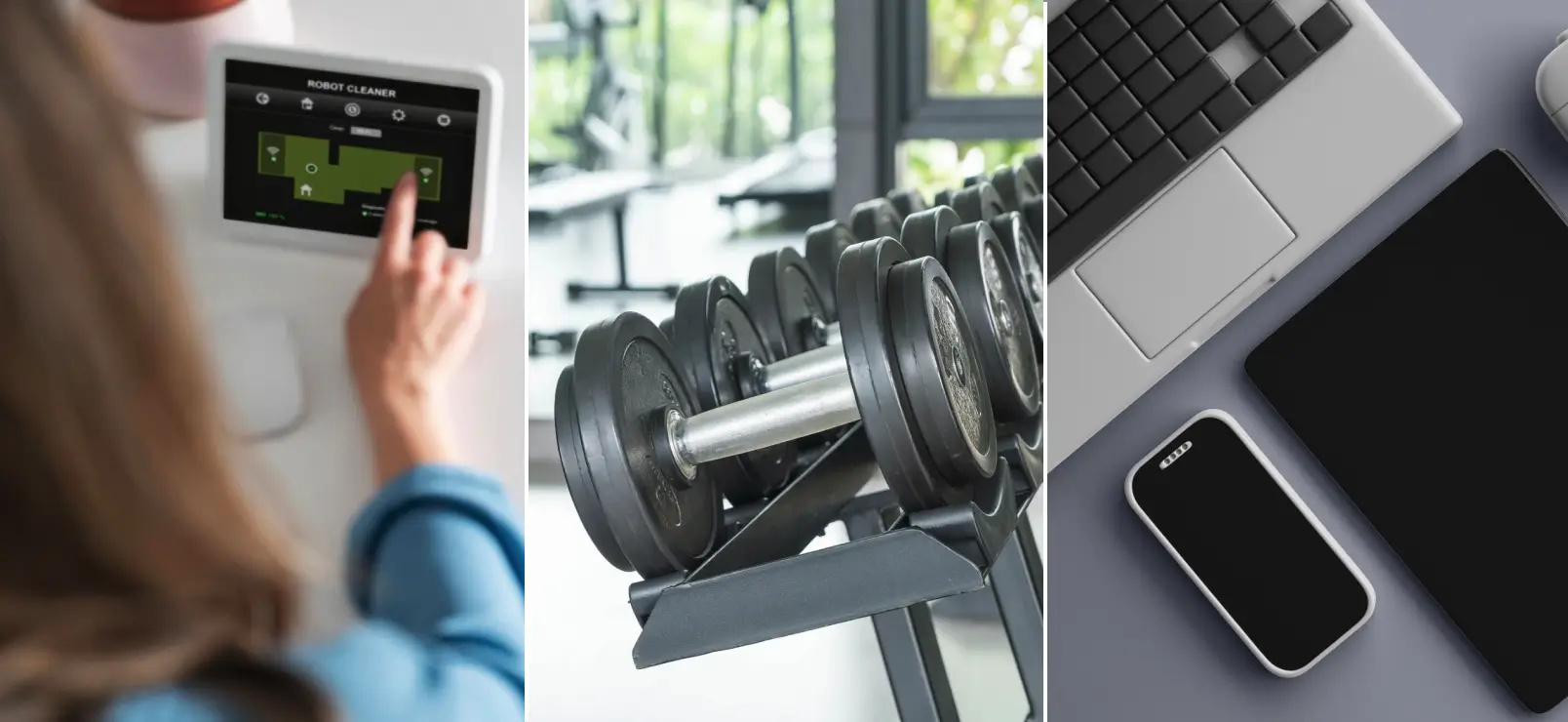
Here are examples that illustrate what the regulation expects.
Example 1: Smart home devices
If a device uses AI to adapt to user patterns, it must not create cognitive overload or stress. The manufacturer must assess and document possible mental health impacts.
Example 2: Household cleaners
Bright or child-friendly designs could attract children. Packaging risks must be considered even if the product is not a toy.
Example 3: Fitness equipment
Height, strength, and body-size differences between genders must be factored into the risk assessment.
Example 4: Apps and digital products
User interface design must prevent confusion, misuse, or emotional distress.
Example 5: Consumer electronics
If the device is small or shiny enough to appeal to children, choking risks must be evaluated.
Implications for All Economic Operators
The GPSR defines economic operators broadly: manufacturers, authorised representatives, importers, distributors, fulfilment providers and responsible persons.
All these actors must:
- Understand product risks for vulnerable consumers
- Verify that instructions and warnings are suitable for all user groups
- Ensure safety information is accessible
- Investigate complaints and accidents, especially involving vulnerable users
- Report accidents via the Safety Business Gateway
- Cooperate with authorities when risks involve vulnerable groups
Fulfilment providers and marketplace operators must also ensure they do not support the distribution of products lacking proper risk assessments.
How Euverify Helps Businesses Meet Vulnerability and GPSR Requirements
Assessing risks for vulnerable consumers can be complex, especially if you handle many product categories or cross-border sellers.
Euverify supports businesses by acting as:
• EU/UK Authorised Representative & Responsible Person
We help verify documentation and ensure product information meets GPSR requirements for all user groups.
• Compliance Partner for Risk Assessment
We assist with risk assessment frameworks that specifically cover:
- Vulnerable consumers
- Child appeal
- Mental health risks
- Accessibility
- Gender-based considerations
- Product appearance and foreseeable misuse
This protects economic operators from non-compliance and helps ensure products are safe for everyone.
Final Takeaway
The GPSR has fundamentally reshaped what product safety means in the EU. It is no longer enough for a product to work as intended or to meet traditional technical standards. Regulators now expect businesses to understand who their consumers are, how they interact with products in real environments, and where vulnerabilities may turn small oversights into serious risks.
Vulnerable users are at the centre of this shift. That means your risk assessments, safety instructions, technical files, customer support processes, and recall procedures must all reflect the reality that not every consumer experiences a product in the same way. Ignoring this is no longer only a design flaw. It is a compliance failure.
For manufacturers, importers, distributors, fulfilment providers, and online marketplaces, this is a direct operational challenge. It requires new thinking, new documentation structures, and in many cases, new internal processes. But it is also an opportunity to build safer products, communicate more clearly, and create stronger trust with consumers.
The businesses that take these requirements seriously now will be the ones that avoid costly recalls, enforcement actions, and reputational damage later. The gap between minimal compliance and real safety has never been narrower.
Euverify helps close that gap. We ensure that your products, communication channels, and safety documentation all meet the GPSR’s heightened expectations for identifying and protecting vulnerable consumers. With the right guidance and tools, GPSR compliance becomes not only achievable but a competitive advantage.