Selling Screen Protectors in the EU & UK: A Compliance Checklist
Screen protectors might look like simple add-ons, but under EU and UK law they’re still treated as consumer products. That means they carry real responsibilities when it comes to safety, compliance, and documentation.
From 2025, the rules get even stricter under the EU’s General Product Safety Regulation (GPSR) and the UK’s consumer protection laws, especially for items sold online or imported from outside the region.
So, whether you’re a brand, an importer, or an Amazon seller, here’s what you need to know to make sure your screen protectors stay legal and ready for market.
Are Screen Protectors Regulated in the EU and UK?

Yes. Even though screen protectors don’t plug in or connect via Bluetooth, they still count as “consumer products” under EU and UK law. That means they must meet safety standards set out in the EU’s General Product Safety Regulation (EU) 2023/988 and the UK’s General Product Safety Regulations 2005 (as amended).
If you’re selling screen protectors to consumers, they need to meet general safety requirements, including:
- No sharp edges or risk of cuts
- No harmful chemicals in adhesives or coatings
- Stability in normal use (not cracking or shattering too easily)
- Safe packaging, especially for glass or hybrid materials
- Proper labelling and traceability details
The EU GPSR, in force since 13 December 2024, replaces the older General Product Safety Directive and strengthens enforcement across all Member States. The UK follows a similar approach under its own laws post-Brexit.
What Makes a Screen Protector “Unsafe” Under GPSR?
Based on the Consumer Product Risk Assessment (2023) published on the EU Safety Gate system and recent recalls, common hazards with screen protectors include:
- Shattering risk from brittle tempered glass
- Laceration hazards from sharp edges or cracked fragments
- Chemical risks from adhesive or anti-glare coatings (especially those in contact with skin)
- Lack of secure adhesion, making the protector a distraction or hazard during use
- Misleading safety claims such as “shatterproof” or “military-grade” without valid test backing
For example, an EPA-certified lab test reported by Business Today, Mamavation, and Photodon found PFAS, so-called “forever chemicals” linked to health risks, in screen protectors from brands like ZAGG and GOTO. This shows that even everyday accessories aren’t automatically safe. The presence of PFAS can trigger REACH requirements in the EU and raise concerns under the GPSR.
Tip: Even if screen protectors are sold as cosmetic or “optional” add-ons, they still have to be proven safe for real-world use. That includes risks like accidental drops, heat exposure, or even being mishandled by children.
1.GPSR and General Product Safety Obligations
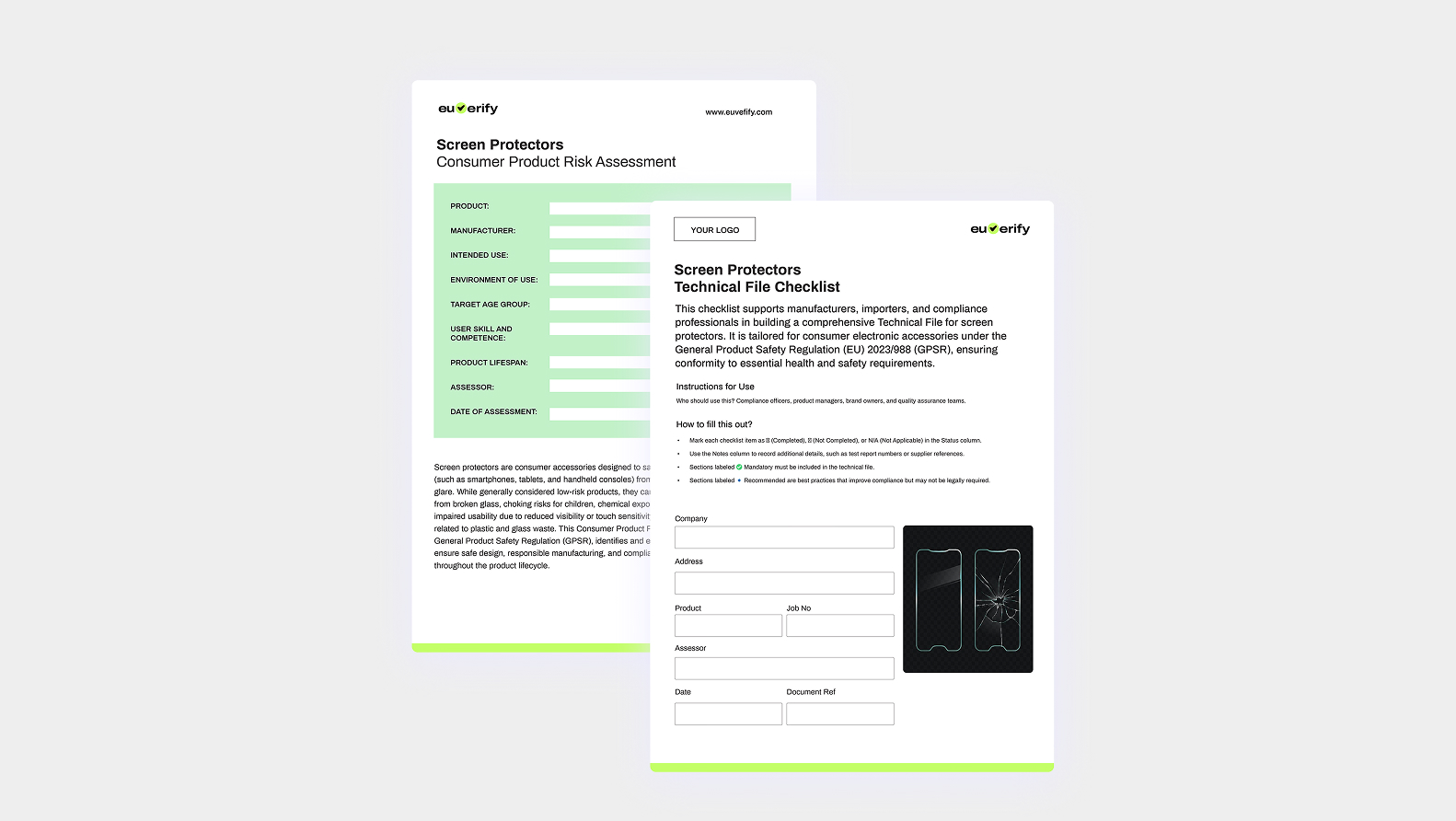
Under the EU GPSR and the UK GPSR, screen protectors must meet several core obligations:
Be safe for use
Products need to be safe not just for normal use, but also for reasonably foreseeable misuse. For example, if a glass protector cracks when applied incorrectly, it could cut a child. Therefore, risks like this must be considered in both design and labelling.
Undergo a risk assessment
A product-level risk assessment is mandatory and must be documented. According to EU Safety Gate guidance, cutting hazards and chemical composition are the most common risk factors. Manufacturers should use the EU’s RAPEX risk assessment methodology as the reference framework.
Include clear instructions
Installation and removal instructions must be easy to follow, ideally with pictograms, and provided in the local language of the country where the product is sold (e.g. French in France, German in Germany). Poor instructions increase misuse — and that counts as non-compliance.
Avoid misleading claims
Do not use terms like “unbreakable,” “shockproof,” or “scratchproof” unless you have test reports to prove them. Unsupported claims such as “military grade” have already resulted in product bans in several EU Member States.
2. Labelling Requirements for Screen Protectors
In both the EU and the UK, even low-risk products like screen protectors must carry essential safety labelling. This information can appear on the product itself, the packaging, or an accompanying leaflet, and should include:
- Product identification (e.g. model number or batch code)
- Manufacturer name and address
- Importer name and address (if the manufacturer is based outside the EU/UK)
- Country of origin (e.g. “Made in China”)
- Warnings or restrictions (e.g. not for children under 3, do not use on cracked screens)
- Language: Must be in the official language(s) of the country where the product is sold
Under the GPSR, labels must always be visible, legible, and indelible.
Exception: If the screen protector is too small or fragile to carry this information, it may be placed on the packaging or in a leaflet instead. This approach is supported by the European Commission’s Blue Guide (2022).
3. Packaging Safety and Presentation
Packaging can introduce safety risks if:
- Sharp plastic blisters that could cut users
- Loose desiccants or small parts that pose a choking hazard
- Labels or instructions that peel off too easily, tempting consumers to discard safety information
The GPSR specifically warns against packaging designs that might encourage consumers to throw away safety-critical details.
To comply:
- Avoid packaging that looks like toys or cosmetics if the product is not intended for children
- Include a QR code linking to digital safety information, especially if packaging space is limited
Ensure that protective film or trays don’t create sharp edges once opened
4. Do Screen Protectors Need a Declaration of Conformity?
For most screen protectors, you don’t need a formal Declaration of Conformity (DoC), because the GPSR doesn’t require one. The exception is if your product includes electronic features or falls under specific EU legislation, such as the Radio Equipment Directive or the Low Voltage Directive. In those cases, a DoC is necessary.
That said, you are still expected to:
- Maintain supporting documentation (risk assessment, material safety data, and relevant test results) to show compliance with the GPSR.
- Demonstrate the safety of materials, particularly adhesives, coatings, or surface treatments.
- Keep evidence of warnings and instructions where applicable.
If your product includes additional claims, such as electromagnetic shielding, UV filtering, or anti-radiation features, other legislation may apply, including:
- The EMC Directive (EU) / UK EMC Regulations
- REACH (chemical safety)
- RoHS (if electronics or conductive layers are used)
In borderline cases, some businesses choose to prepare a voluntary declaration of compliance and designate an EU/UK Responsible Person as a way to demonstrate due diligence, even though the GPSR itself does not require a formal Declaration of Conformity.
5. Amazon, eBay, and Marketplace Enforcement
Online marketplaces are increasingly strict about GPSR and UK product safety compliance. Listings can be blocked or accounts suspended if the right documentation is missing.
- Amazon requires EPR registration and correct labelling for screen protectors in certain markets.
- eBay and Allegro expect producers and importers to provide traceability details and product information.
- Marketplaces may request test reports and risk assessments, particularly in Germany, France, and Spain.
Under the GPSR, even accessories like screen protectors are subject to rapid enforcement. If a product is flagged for issues such as undeclared chemicals or installation risks, it can be delisted or recalled. Authorities use tools like the EU Safety Gate to issue alerts, and businesses must be prepared to act quickly.
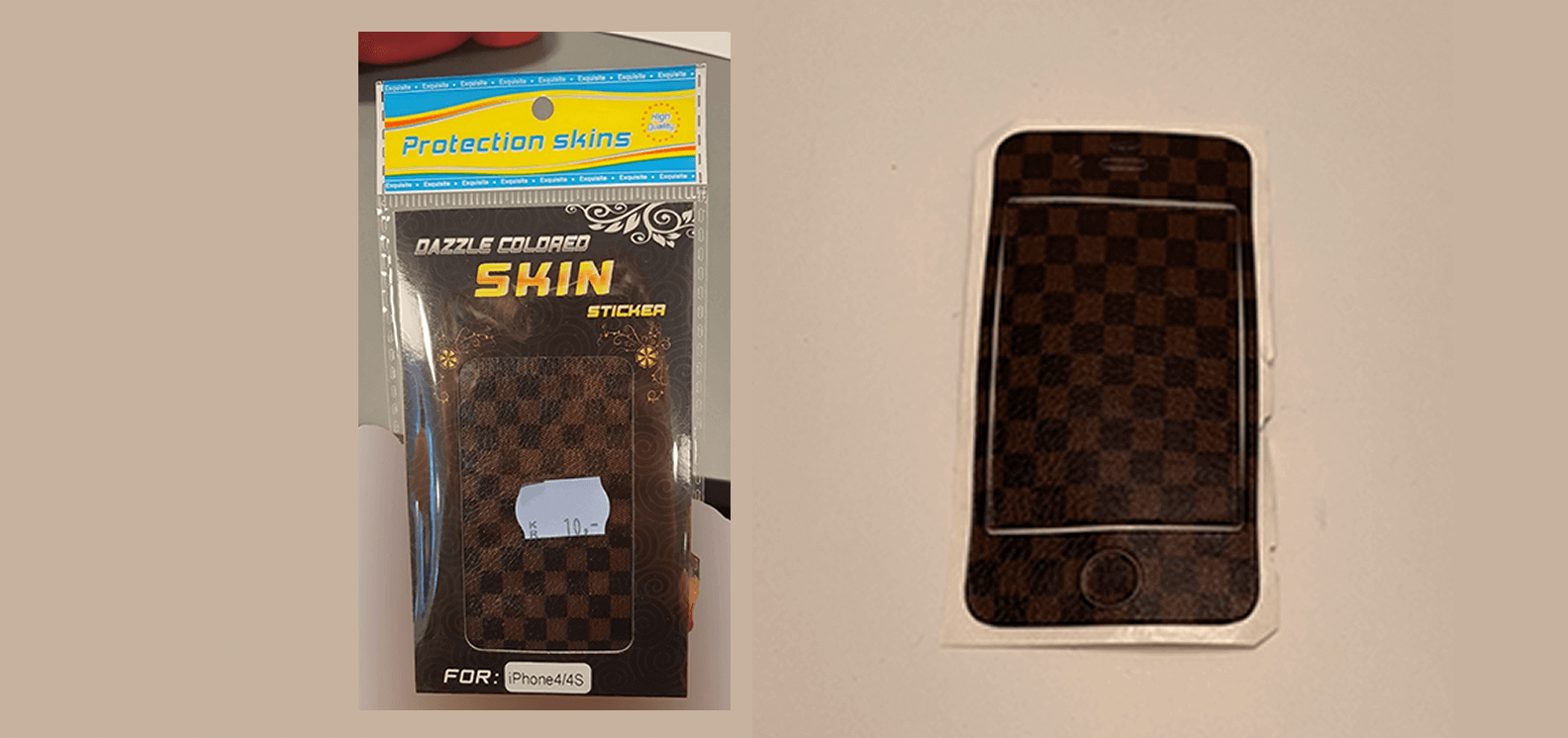
For example, Sweden withdrew a plastic screen protector for iPhone 4/4S, sold as a “Skin sticker,” after tests showed it contained an excessive level of cadmium (0.04% by weight). Cadmium is dangerous because it can build up in the body, damage kidneys and bones, and may cause cancer. The brown screen protector, packaged in a simple plastic bag and with its country of origin unknown, failed to meet the EU’s REACH Regulation. As a result, the distributor has removed the product from the market as of 30 August 2024.
Key point: Non-EU and non-UK sellers must appoint an Authorised Representative in order to legally place screen protectors on the market.
6. Do You Need an Authorised Representative (AR)?
Yes, you need an Authorised Representative if your business is not based in the EU or UK, you sell directly to consumers in these regions, and your name appears as the manufacturer or importer on the product label.
Your Authorised Representative (AR) serves as your local legal contact and holds your compliance documents. The GPSR (Article 16) and UK GPSR make this a legal requirement, not an option.
The AR must:
- Keep your risk assessment and documentation available for inspection
- Handle market surveillance requests
- Support corrective actions such as recalls, if needed
Without an AR, your products may be blocked by customs or delisted by platforms.
7. Post-Market Obligations
Once your screen protector is on the market, your job isn’t finished. You must:
- Monitor incidents: Keep a register of complaints, defects, and corrective actions.
- Report safety issues promptly: Notify regulators through the EU Safety Business Gateway or UK OPSS if there is a serious risk. Typically within 2 working days.
- Take corrective action: Be ready to update instructions, issue warnings, withdraw products, or conduct recalls. Under the EU GPSR, recalls must also provide consumers with free remedies such as repair, replacement, or refund.
- Cooperate with authorities: Importers and distributors share the duty to act quickly if risks are identified.
Delays can lead to heavy fines, enforcement action, and your product being flagged on the EU Safety Gate (RAPEX), which publicly lists unsafe goods.
Final Takeaway
Screen protectors may be small and inexpensive, but under EU and UK law they still have to meet the same safety standards as any other consumer product. Whether you are a brand, OEM, or marketplace seller, compliance is essential.
The new GPSR makes it your responsibility as the seller or manufacturer to prove your product is safe. With tighter marketplace enforcement, more customs checks, and stricter cross-border rules, it has never been more important to get compliance right.
Need help with risk assessments, labelling, or Authorised Representative services? Euverify makes compliance simple so you can sell with confidence across the EU and UK.