
Second-Hand, Refurbished, Remanufactured: What Each One Means for Your EU Compliance Obligations
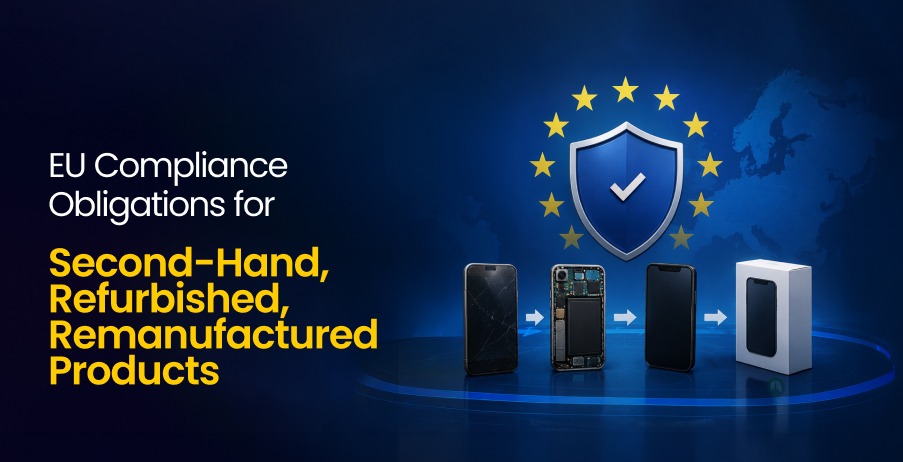
The terms get used interchangeably all the time. A product listed as “refurbished” on one platform might be described as “reconditioned” on another. A seller calling something “remanufactured” might mean something completely different from what a manufacturer means by the same word.
That confusion matters more than most people realise. Because under EU law, what category your product falls into has a direct bearing on who is responsible for its safety, what obligations apply, and what happens if something goes wrong.
This post explains what each term actually means, how they differ from a compliance standpoint, and what EU sellers, importers, and marketplace operators need to have in place.
Why the Definitions Matter
That ambiguity creates real compliance risk. If you do not know which category your product falls into, you cannot confidently assess which legal obligations apply to you. A study published by the European Commission in April 2026 (Study in support of the implementation of the General Product Safety Regulation: product safety in the circular economy), found that these terms are often interpreted differently and used interchangeably — creating real compliance risk for businesses that assume the wrong set of rules applies to them.
“The conceptual boundaries in practice can be blurry and overlapping. As a result, these terms are sometimes interpreted differently and used interchangeably, creating ambiguity in their meaning and application.”
And under the General Product Safety Regulation (GPSR), which has been in force since December 2024, the obligation to ensure product safety sits firmly with whoever places the product on the EU market.
Second-Hand Products
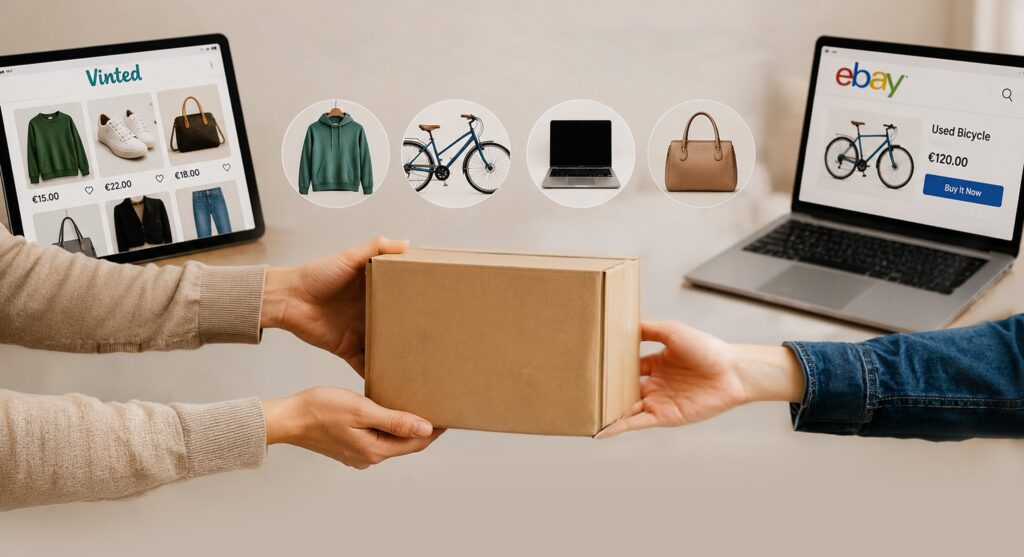
A second-hand product is one that has already been placed on the market and used, and is now being sold again. The key characteristic is that it changes hands without any significant intervention. No systematic refurbishment, no manufacturing process. It goes from one owner to the next broadly as it is.
Second-hand products cover an enormous range of goods. Clothing sold on Vinted, a used bicycle on eBay, a pre-owned laptop on Back Market. The second-hand market across Europe was estimated at between EUR 68 and 123 billion, making it by far the largest of the circular business models.
From a compliance standpoint, second-hand products come with the highest uncertainty. They have typically not been inspected or tested before resale. Their usage history is often unknown. Labels may have faded. Safety instructions may be missing. And if a product was non-compliant when it was first placed on the market, that non-compliance does not disappear when it changes hands.
“Concerns around wear and tear, as well as unknown stress factors, are more acute in second-hand business models than in the case of refurbished or repaired products.”
Under the GPSR, second-hand products placed on the EU market by a business are subject to the same general safety requirement as new products. If you are a business selling second-hand goods to EU consumers, you are placing those products on the market and you carry the legal responsibility for their safety. The fact that someone else originally manufactured and sold the product does not change that.
Consumer-to-consumer (C2C) transactions, where an individual sells to another individual, fall largely outside the direct scope of GPSR. But the moment a seller is operating as a trader, the obligations apply.
Refurbished Products
Refurbishment involves more active intervention than second-hand resale. A refurbished product has been prepared, cleaned, tested, serviced, and where necessary repaired, with the goal of restoring it to a functional state within the intended use and range of performance originally conceived at the design stage.
In practice, refurbishment varies enormously in depth. A basic refurbishment might mean cleaning a device and replacing a cracked screen. A more thorough process might involve replacing multiple components, running full diagnostics, and applying a warranty. The word “refurbished” on a product listing tells you very little about how much intervention actually took place.
That variability is one of the main compliance challenges. When skill levels and practices differ significantly between operators, safety outcomes do too.
From a compliance standpoint, whoever places the refurbished product on the EU market carries the safety obligation under GPSR. If you are importing refurbished electronics from outside the EU, you are the importer and the responsibility is yours. You need to be confident the product is safe, and you need to be able to demonstrate that if asked.
For products that fall under specific EU directives, the picture is more complex. A refurbished electronic device may need to meet RoHS and CE marking requirements. Assuming that an older product is grandfathered in because it was compliant when first sold is not a safe assumption. It may not comply with current standards.
Remanufactured Products
Remanufacturing is the most intensive of the circular processes. Under EU law, remanufacturing is defined as a process through which a new product is produced from objects that are waste or used components, and through which at least one change is made that substantially affects the safety, performance, purpose, or type of the product.
The key word is substantially. Remanufacturing does not just restore a product. It transforms it to the point where it is effectively a new product. Disassembly, cleaning, part replacement, reassembly, and testing are all involved, with quality controls designed to produce something that performs like new and is typically sold with a warranty.
The automotive sector is the most established area for remanufacturing: engine components, alternators, gearboxes. But it also occurs in electronics and industrial equipment.
From a compliance perspective, remanufactured products are treated as new products being placed on the market for the first time. That means all the obligations that apply to new products apply here too: CE marking where required, declarations of conformity, technical documentation, and compliance with current standards rather than those in place when the original product was made. If the remanufacturer is based outside the EU, an EU Authorised Representative is required.
This is where a lot of remanufacturers get caught out. Because the product has been through a previous life, there is an assumption that some of the compliance work has already been done. It has not. When a remanufactured product is placed on the market as essentially new, the compliance clock resets.
Reconditioned Products
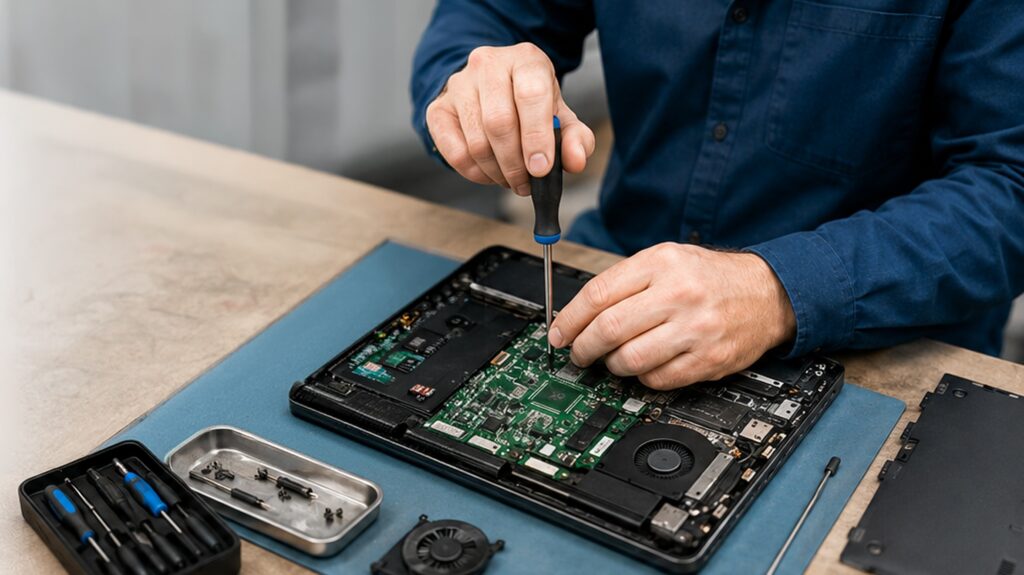
Reconditioning sits somewhere between refurbishment and remanufacturing, though it lacks an official definition in EU legislation. In practice, it typically involves rebuilding major components to a working condition, replacing parts that have failed or are nearing failure even if the customer has not reported issues.
Because there is no standardised definition, compliance obligations need to be assessed based on what was actually done to the product. If the process was closer to refurbishment, refurbishment obligations apply. If the changes were substantial enough to qualify as remanufacturing, the product should be treated as new.
This is an area where getting advice before going to market is genuinely worthwhile. If you are not sure which category your product falls into, the Euverify team can help you assess it.
The Common Thread: GPSR Applies Across All of Them
Regardless of which category applies, the GPSR’s general safety requirement covers all consumer products placed on the EU market, including those re-entering the market through circular business models. In practice that means:
• You need to be able to demonstrate that the product is safe
• You need traceability in place so you can identify your suppliers and the businesses you supply to
• You need to ensure safety information reaches the end consumer
• If you have no EU-based importer or manufacturer, you need to appoint an EU Authorised Representative — a natural or legal person established in the EU who takes on regulatory responsibility on your behalf
That last point is one of the most commonly missed obligations. Under the GPSR, marketplaces are now required to verify that non-EU sellers have an AR in place, which means this gap is increasingly being caught and enforced.
What to Check Before You Place a Circular Product on the EU Market
Whether you are selling second-hand goods, importing refurbished electronics, or remanufacturing industrial components, the same basic questions apply.
1. Does the product meet current EU safety requirements? Not the requirements from when it was first made. The requirements that are in force now.
2. Do you have documentation to back that up? For refurbished and remanufactured products this includes testing records, quality checks, and evidence of any components that were replaced.
3. Is there an EU Authorised Representative in place if you have no EU-based manufacturer or importer?
4. Is the required safety and product information reaching the consumer? Products re-entering the market consistently lack safety-related disclosures, particularly around product history and known hazards.
5. Are you aware of your obligations if a product needs to be recalled? Tracking circular products through their second and third lives is significantly harder than tracking new products, and this is a major challenge for both businesses and market surveillance authorities.
“While products re-entering the market and sold online generally include basic product details, they often lack specific safety information. This issue was consistent across all product categories, highlighting a widespread gap in safety-related disclosures.”
How Euverify Can Help
Euverify provides EU Authorised Representative and UK Responsible Person services for businesses placing products on the EU and UK markets, including those operating in the circular economy. If you are importing, refurbishing, or remanufacturing products for EU or UK sale and you do not have a local representative in place, we can set that up within 24 hours.
We also support businesses with Declarations of Conformity and technical documentation across a range of product categories including electronics, general consumer products, cosmetics, and toys.
Get in touch with the Euverify team to understand what your specific products require.