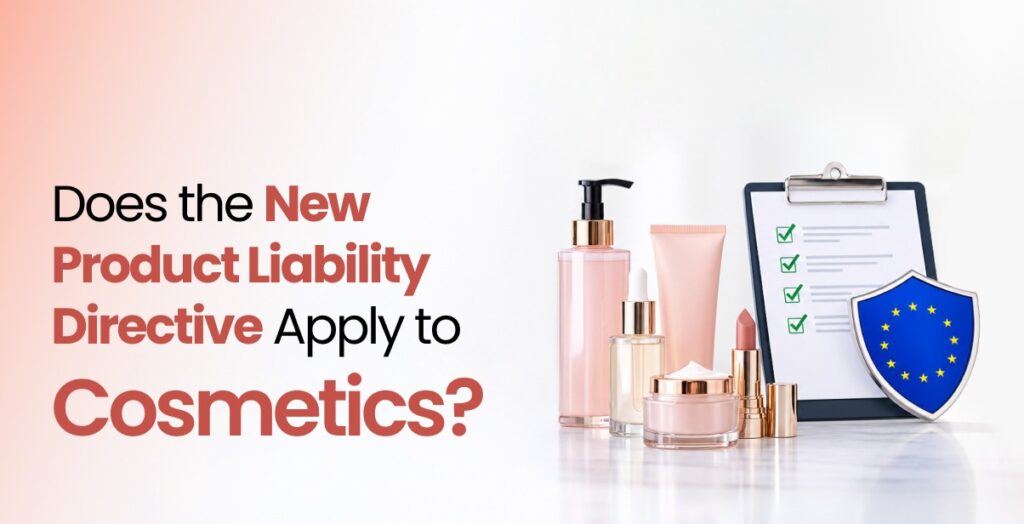

Does the New Product Liability Directive Apply to Cosmetics? What Beauty Brands Selling in the EU Need to Know
Yes. The new EU Product Liability Directive (EU) 2024/2853 covers cosmetics placed on the EU market after 9 December 2026. If a defective cosmetic causes injury, including medically recognised harm to mental health, the person affected can claim compensation without having to prove the brand was at fault.
For most beauty brands, the safety rules haven’t changed. The Cosmetics Regulation still sets out what goes into a product, how it is assessed and what the label must say. What changes is what happens when something goes wrong and a customer wants compensation.
The new Directive widens the types of harm people can claim for, lets courts order brands to hand over documents, and makes it easier for claimants to prove a product was defective. Your safety paperwork now does two jobs: it shows you comply, and it is your main evidence if a claim comes in.
What claims could a cosmetics brand face under the new PLD?
Under the new PLD, a customer can claim for death or personal injury, damage to their property, or loss of personal data caused by a defective product. For cosmetics, personal injury is the one that matters most.
In practice, that could mean:
- A severe allergic reaction or chemical burn from a skin cream
- Hair loss or scalp damage from a hair dye or straightening treatment
- An eye injury from a mascara or eye product
- Medically recognised damage to mental health, such as a diagnosed condition following visible scarring
The mental health point is new. The 1985 Directive didn’t mention it, so it depended on each country’s law. The new Directive names it directly, as long as the harm is medically recognised.
The customer doesn’t have to prove you were careless. They need to show three things: the product was defective, they suffered damage, and the defect caused it.
Who can be held liable for a defective cosmetic product?
Under the new PLD, the manufacturer of a defective product is liable. For cosmetics, that usually means the brand owner, because the Directive treats any business that has a product made under its own name or trademark as the manufacturer. The company that physically makes the product can also be liable.
If the manufacturer is based outside the EU, a customer can also claim against:
- The importer that brings the product into the EU
- The authorised representative, meaning an EU business with a written mandate to act for the manufacturer
- The fulfilment service provider, such as a warehouse that stores and ships the product, but only if there is no EU importer or authorised representative
If none of these can be found, a distributor or online marketplace can become liable. This happens when they are asked to name an EU business in the chain, or whoever supplied them, and can’t do so within one month.
When more than one business is liable for the same harm, the customer can claim the full amount from any of them. That business can then try to recover its share from the others.
Is the EU Responsible Person liable under the new PLD?
The new PLD doesn’t mention the cosmetics Responsible Person by name, so the answer depends on the setup. The PLD lists importers and authorised representatives as liable parties, and a cosmetics Responsible Person is often one of these.
Under the Cosmetics Regulation, a cosmetic made outside the EU has its importer as the Responsible Person by default. The importer can also hand the role to another EU business by written mandate. So if your Responsible Person is also your importer, they fall within the PLD’s list. Whether a Responsible Person appointed by mandate counts as an “authorised representative” under the PLD is a legal question that hasn’t been tested in court yet.
If you’re a non-EU brand, it’s worth checking your Responsible Person agreement and asking how it deals with product liability claims.
How do the Cosmetics Regulation and the PLD work together?
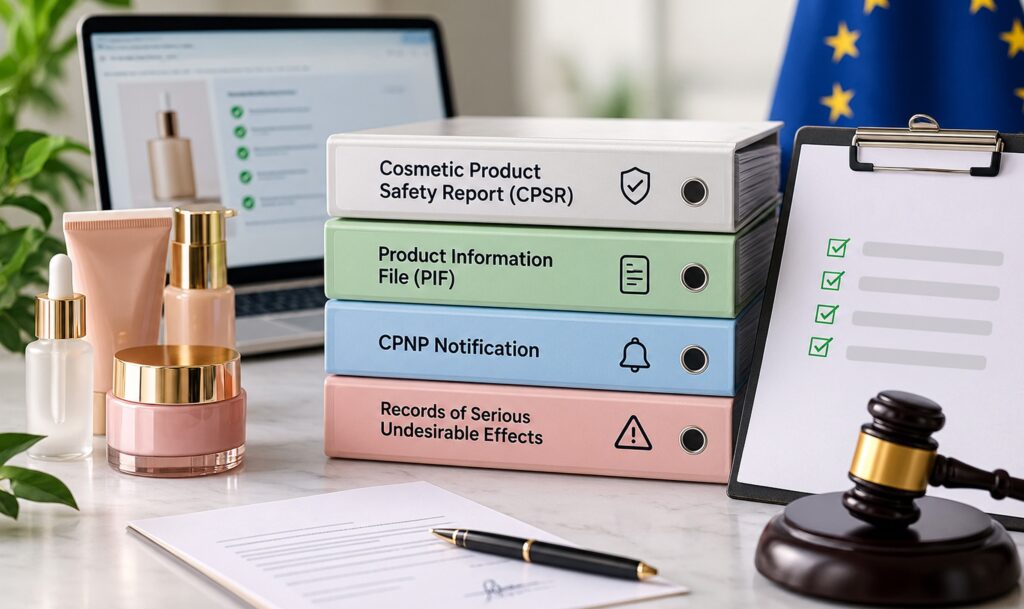
The Cosmetics Regulation sets the safety rules a product must meet before it’s sold. The PLD decides who pays compensation if a defective product causes harm. You need to comply with both.
The documents you already keep under the Cosmetics Regulation become your evidence under the PLD:
- Cosmetic Product Safety Report (CPSR): shows a qualified safety assessor reviewed the formula, ingredients and exposure
- Product Information File (PIF): holds the full product record, which must be kept for 10 years after the last batch is placed on the market
- CPNP notification: shows the product was notified before sale
- Records of serious undesirable effects: show you tracked and reported reactions
If these are complete and current, you’re in a much stronger position if a claim is made.
When is a cosmetic product presumed defective?
Under the new PLD, a product is defective if it doesn’t give the level of safety people are entitled to expect, or that EU or national law requires. A court will look at things like the label, the instructions, how the product is likely to be used, and any recall.
In three situations, a court will presume the product is defective unless you can prove otherwise:
- You don’t hand over relevant evidence after a court orders you to
- The product breaks a mandatory safety rule meant to protect against the harm suffered, for example a banned ingredient or one above its legal limit
- There was an obvious malfunction during normal or reasonably expected use
A court can also presume defect, or the link between the defect and the harm, when the case is very technically or scientifically complex and the claimant would struggle to prove it.
For cosmetics brands, the second point is the one to watch. Ingredient restrictions in the Cosmetics Regulation are mandatory safety rules. A product that breaks them gives a claimant a strong starting point.
The disclosure rule matters too. If a customer presents a plausible claim, a court can order you to hand over relevant documents, such as your safety report or complaint records. Trade secrets are protected, but missing or incomplete records can count against you.
What should beauty brands do before 9 December 2026?
Beauty brands should use the time before 9 December 2026 to check that their safety records, contracts and insurance would stand up to a claim. The main steps are:
- Review your CPSR for every product. Check that it reflects the current formula and the latest ingredient restrictions.
- Keep your PIF complete and easy to find. If a court orders disclosure, you’ll need the right documents quickly.
- Log every complaint and reaction. Record what happened, how you responded and whether it was reported as a serious undesirable effect.
- Check your labels and instructions. Clear warnings and directions for use are part of how a court judges whether a product is safe.
- Read your Responsible Person and importer agreements. See how they handle liability claims and who pays what.
- Review supplier contracts. You can’t limit your liability to customers by contract, but you can agree how costs are shared with ingredient suppliers and contract manufacturers.
- Talk to your insurer. Check that your product liability cover reflects the new rules, including claims for mental health harm.
The new rules apply to products placed on the EU market after 9 December 2026. Stock placed on the market before then stays under the 1985 rules.
Selling cosmetics to the EU from outside the EU?
If your brand is based outside the EU, the new PLD affects you even without an office in Europe. A customer in the EU can claim against your importer or authorised representative there, and in some cases against the warehouse that ships your orders.
Those businesses will want to know your records are in order before they take on your products. Brands with a complete CPSR, a well-kept PIF and clear agreements in place will find it easier to work with EU importers, distributors and Responsible Persons from December onwards.
Getting your cosmetics ready for the new PLD
The new PLD doesn’t add new safety tests or labels for cosmetics. It raises the stakes on the records and agreements you already have. A current CPSR, a complete PIF and clear agreements with your Responsible Person and suppliers are your best protection.
Euverify works with cosmetics brands as their EU and UK Responsible Person, and prepares CPSRs, PIFs and CPNP and SCPN notifications. If you’d like to check where your products stand before December, start a free 14-day trial or book a demo with our team.
Frequently Asked Questions
Yes. The new PLD covers all movable products, including cosmetics, placed on the EU market after 9 December 2026.
No. The new PLD is EU law, so it covers cosmetics placed on the EU market. In Great Britain, product liability claims still fall under the Consumer Protection Act 1987. If you sell in both markets, you need to think about each set of rules separately.
There’s no cap. The new PLD doesn’t let national law or a contract limit how much a brand has to pay an injured person, so courts can’t apply a maximum. It also has no minimum value for damage to property.
No. The new rules apply to products placed on the EU market after 9 December 2026. Stock placed on the market before that date stays under the 1985 Product Liability Directive.
Sometimes. A court judges safety based on how a product is likely to be used, including misuse that isn’t unreasonable. If the customer’s own fault helped cause the harm, for example by ignoring a clear warning on the label, the court can reduce or refuse the compensation.